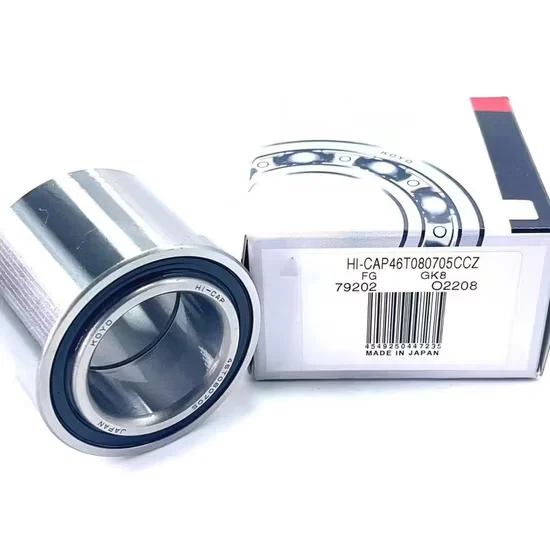
Mixed-Brand Sourcing — Consolidate your NSK 7206c P5 angular contact ball bearing orders with SKF or FAG equivalents in a single shipment without juggling multiple suppliers.
Technical Specifications
| Parameter | Value |
|---|
| Designation | NSK 7206c P5 |
| Bearing Type | Angular Contact Ball Bearing |
| Bore Diameter (d) | 30 mm |
| Outside Diameter (D) | 62 mm |
| Width (B) | 16 mm |
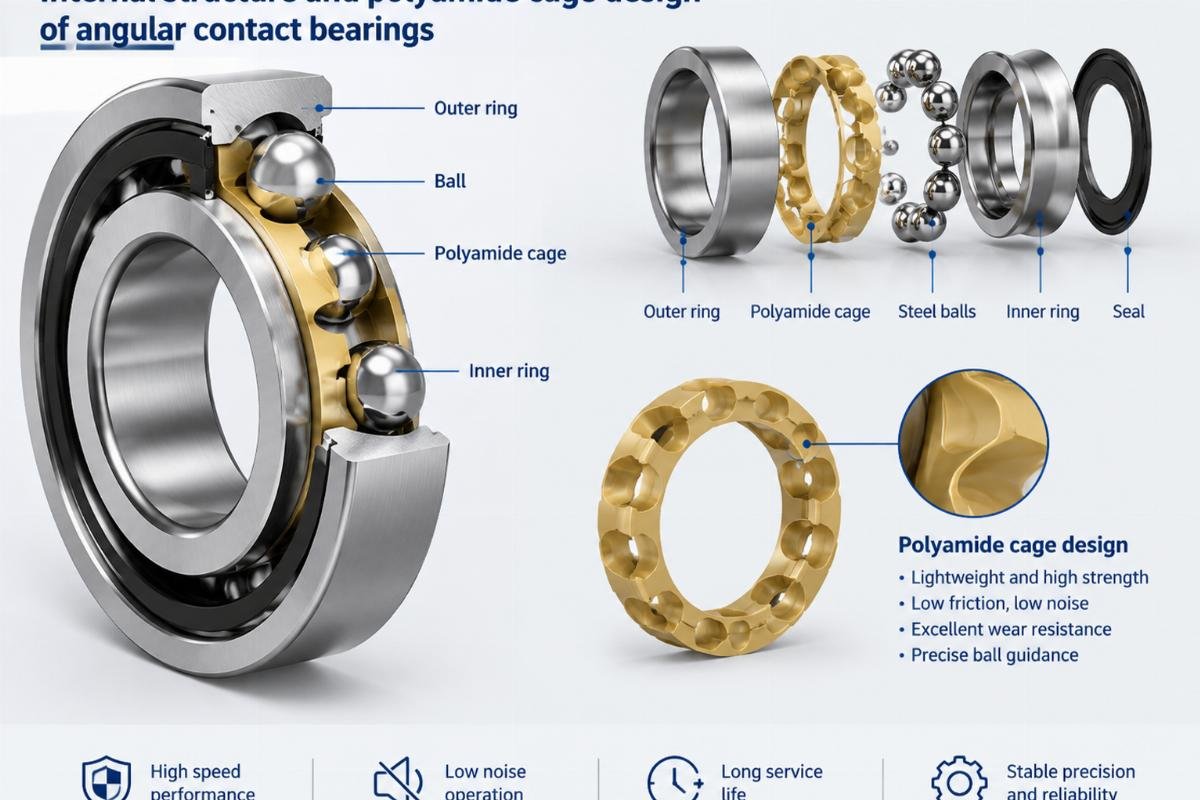
| Cage Material | Nylon (Polyamide) |
| Seal or Shield Type | Open |
| Clearance Class | C0, C1, C2, C3, C4, C5 |
| Precision Class | P5 |
| Contact Angle | 15° |
| Material | Gcr15 Bearing Steel |
| Arrangement | Single Row |
Application Suitability
| Industry | Typical Applications |
|---|
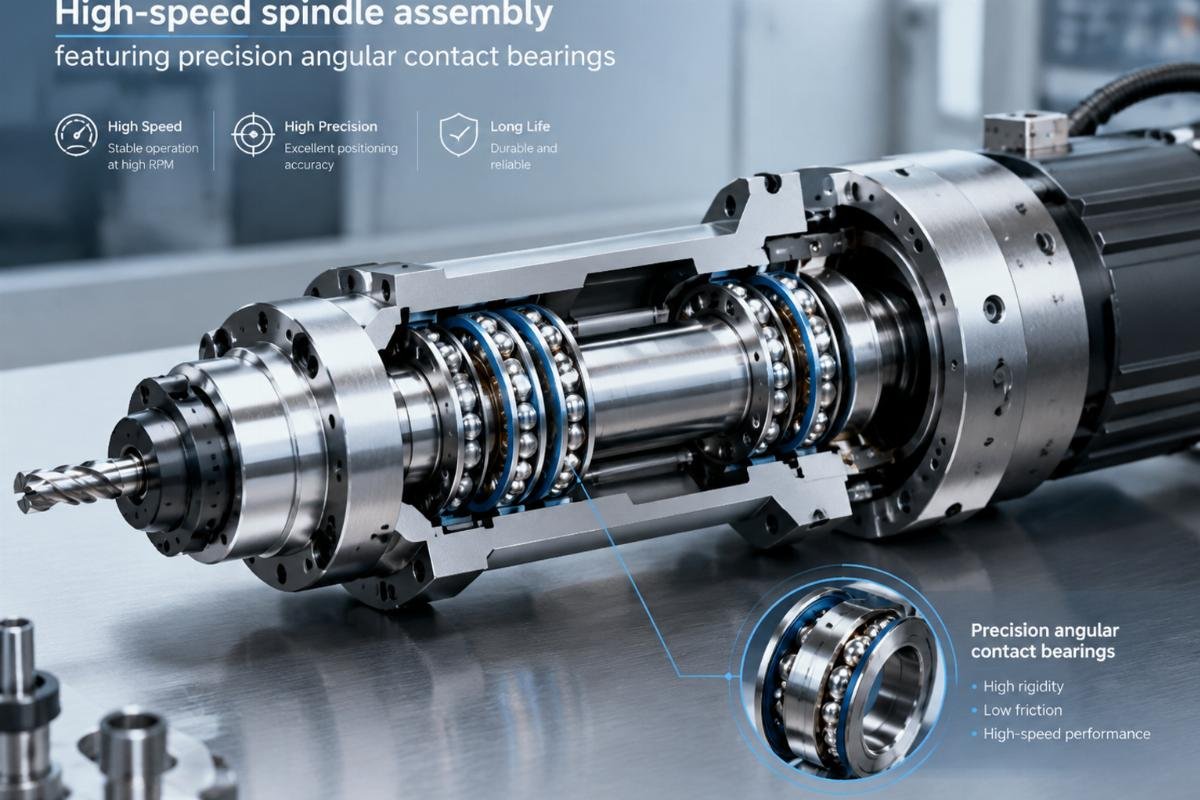
| Machine Tools | High-speed spindle assemblies, precision grinding heads |
| Fluid Machinery | Centrifugal pump impeller shafts, multi-stage compressor rotors |
| Robotics | High-precision joint actuators, servo motor gearboxes |
Why Spindle Vibration Ruins Precision Before the NSK 7206c P5 angular contact ball bearing Fails
Tighter tolerances mean zero margin for thermal expansion errors.
In my years supporting spindle assemblies across Vietnam, I have seen perfectly machined housings ruined because the wrong clearance class was paired with a high-speed polyamide cage. When rotational speeds climb, friction heat expands the inner ring, silently wiping out the P5 running accuracy and causing catastrophic seizure before any vibration alarm triggers [NEED_CITE: thermal displacement effects on spindle bearing preload].
Matching Precision Tolerances to High-Speed Demands
Selecting the right NSK 7206c P5 angular contact ball bearing requires balancing rotational velocity with axial stiffness. The 15° contact angle provides an optimal compromise, delivering the radial support needed for heavy cutting forces while maintaining the axial rigidity required for tight machining tolerances. Our engineering team frequently cross-references these specific dimensional constraints to ensure the selected configuration survives the demanding thermal cycles of continuous CNC operations.
Addressing Thermal and Lubrication Challenges in Spindles
High-speed spindles generate immense friction heat, directly impacting internal clearance and lubrication film thickness. An open design allows flexible oil-air lubrication, critical for flushing wear debris and managing thermal gradients. If the polyamide cage operates beyond thermal limits without cooling, the material degrades, causing sudden loss of ball guidance [NEED_CITE: high-speed bearing lubrication and cage failure mechanisms]. Contamination entering the open raceway instantly scores precision surfaces, making pristine assembly environments mandatory.
Decoding the Engineering Behind the Suffixes
The "c" suffix designates a 15° contact angle, minimizing friction heat compared to steeper angles, ideal for high-RPM spindles. The P5 precision class guarantees strictly controlled dimensional accuracies, ensuring tight geometric tolerances during heavy cuts. The lightweight polyamide cage reduces centrifugal forces at extreme speeds, while the open configuration necessitates external lubrication to prevent thermal runaway. These specific design choices collectively define the operational envelope of this component.
The Hidden Toll of Mismatched Clearance and Precision
Specifying a standard clearance instead of a preloaded or matched set often leads to microscopic skidding under high-speed, light-load conditions. This skidding rapidly generates localized heat, smearing the raceway and causing premature fatigue that standard life calculations fail to predict [NEED_CITE: rolling bearing failure mode classification per ISO 15243]. Ultimately, this results in unplanned downtime, scrapped high-value workpieces, and the costly replacement of the entire spindle cartridge.
Securing Genuine Traceability for Critical Spindle Components
Counterfeit bearings often fail strict P5 dimensional tolerances, causing immediate spindle runout. We source from authorized channels, providing batch traceability to verify Gcr15 steel metallurgy. Our team reviews your clearance requirements to prevent mismatch errors causing early failures. Furthermore, we consolidate mixed-brand orders, allowing you to secure genuine equivalents without managing fragmented supply chains, ensuring reliable long-term operation for your critical machinery.
Documentation & Authenticity
- Original manufacturer batch traceability certificates verifying Gcr15 steel metallurgy.
- Dimensional and P5 running accuracy inspection reports confirming tight tolerances.
- Certificate of Conformity matching the specific 15° contact angle specifications.
- Official manufacturer packaging with intact anti-counterfeit security seals.
Storage, Handling & Mounting Protocols
- Store the open bearings in their original vapor-phase inhibitor packaging to prevent raceway corrosion before assembly.
- Use lint-free gloves during handling to avoid transferring skin acids to the P5 precision-ground surfaces.
- Maintain strict climate control in the storage area to prevent condensation inside the polyamide cage pockets.
- Ensure the spindle housing is thoroughly flushed and dried before mounting to protect the open bearing from particulate contamination.
Technical Review and Selection Guidance
To ensure optimal spindle performance, please provide your specific radial and axial load profiles, maximum operating speeds, and target stiffness requirements. Sharing the OEM spindle model number allows our engineering team to perform precise cross-reference verification and L10 life calculations. We can also advise on the most suitable clearance class and lubrication strategy for your exact machining environment.
Frequently Asked Questions
Q: How do I verify the authenticity of P5 precision angular contact bearings?
A: Authenticity relies on checking the original manufacturer's batch traceability documentation and verifying the security seals on the packaging. We provide complete supply chain records for every NSK 7206c P5 angular contact ball bearing, ensuring the metallurgical and dimensional data matches the factory's original production logs, protecting your spindle from counterfeit risks.
Q: What is the difference between C, AC, and B contact angles in 7206 series?
A: The C suffix indicates a 15° contact angle, optimized for high-speed applications with lower axial loads. An AC or B designation represents 25° or 40° angles respectively, which provide higher axial rigidity but generate more friction heat at high RPMs. Selecting the correct angle is critical for balancing speed and stiffness in your specific spindle design.
Q: How to select the right clearance class for high-speed machine tool spindles?
A: High-speed spindles typically require universal flush-ground bearings that are preloaded during assembly, rather than relying on internal radial clearance. If internal clearance is specified, thermal expansion from high RPMs must be calculated to avoid excessive preload or dangerous looseness. Our team can review your thermal models to recommend the exact clearance or preload configuration.
Q: How does a polyamide cage compare to a machined brass cage in high-speed pumps?
A: Polyamide cages are noticeably lighter, reducing centrifugal forces and allowing for higher limiting speeds with lower friction heat generation. Machined brass cages offer superior durability under heavy loads or marginal lubrication conditions but limit the maximum RPM. The choice depends entirely on whether your pump prioritizes extreme rotational velocity or heavy-load endurance.
Q: What are the cross-reference equivalents for 7206c P5 across other brands?
A: While the core dimensions remain identical, suffix conventions for contact angle, cage material, and precision classes vary significantly between manufacturers. We provide exact cross-reference mapping to ensure the equivalent bearing maintains the 15° contact angle and P5 tolerance required for your application, preventing accidental mismatches during procurement and ensuring reliable operation.