6211 Bearing Specs & Equivalents: Wholesale Supplier for Bulk Orders
Verify 6211 bearing specs and equivalents beyond basic dimensions to prevent costly industrial failures. We analyze load ratings, clearance grades, and cross-brand mappings for SKF, FAG, and domestic lines. Secure genuine inventory with full traceability for reliable bulk sourcing and optimized MRO budgets.
-
By author
- Updated
- 7 min read
6211 Bearing Specs & Equivalents: Wholesale Supplier for Bulk Orders
Not all 6211 bearings are created equal, even if they share the same part number.
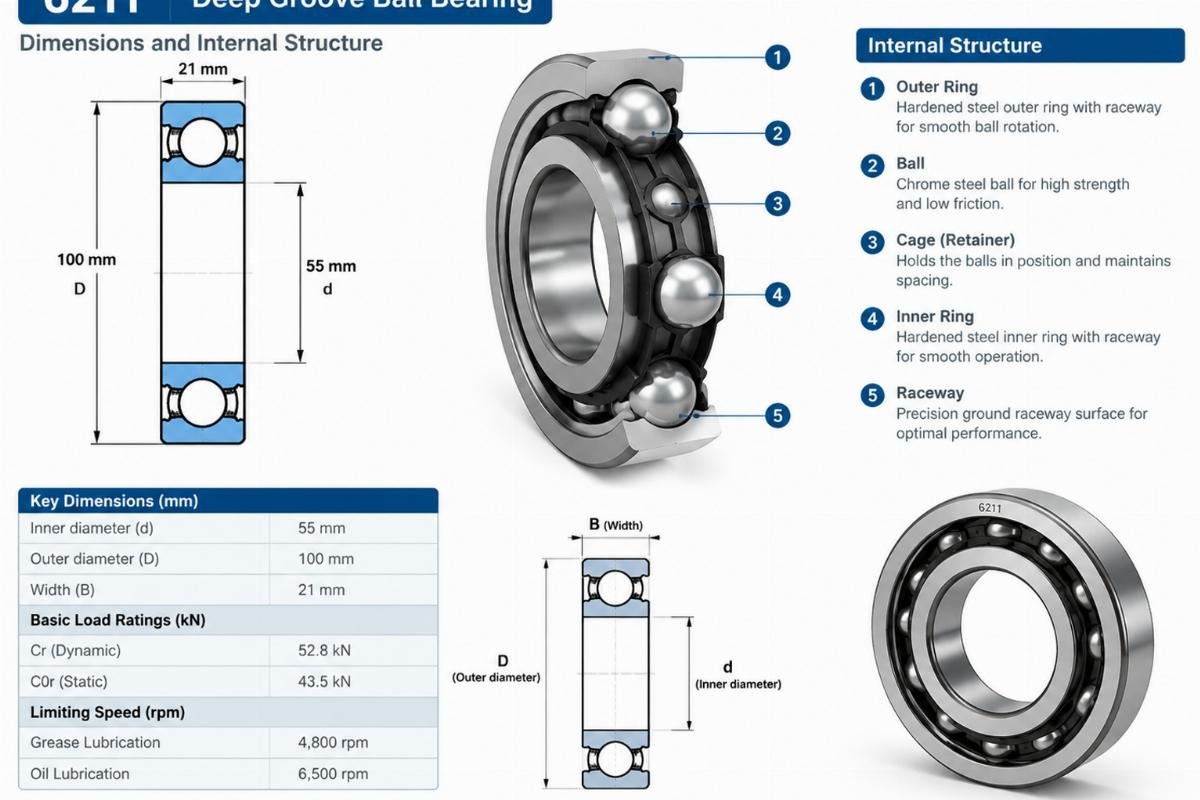
A 6211 deep groove ball bearing is defined by its standard dimensions of 55mm bore, 100mm outer diameter, and 21mm width, but its operational reliability depends entirely on internal clearance grades, steel purity, and heat treatment consistency rather than dimensional compliance alone. When sourcing replacements or bulk inventory, buyers must verify cross-brand equivalents through load capacity ratings and material certifications instead of assuming interchangeability based solely on size.
I still remember the smell of burnt rubber and hot metal at a cement plant in West Africa. The conveyor system had ground to a halt, not because of a motor failure, but because the inner ring of a critical support bearing had fractured. The maintenance team had replaced the original specification with a cheap, unbranded alternative to cut costs. Within weeks, the micro-structural integrity failed under shock loads. That incident shifted my focus from simple parts trading to technical verification. It taught me that while the outer dimensions might match, the internal geometry and metallurgy determine whether a bearing survives months or merely days. [NEED_CITE: common failure modes in heavy industry per ISO 15243]
Understanding these nuances is essential for distributors and OEMs who need to balance cost with reliability. Let us break down what actually matters when you are evaluating a 6211 bearing.
What Are the Core Specifications of a 6211 Bearing?
Dimensions are just the entry ticket; load ratings define performance.
The basic physical profile of a 6211 deep groove ball bearing is standardized globally. However, relying only on the outer measurements ignores the factors that cause premature fatigue. The dynamic and static load capacities, along with the limiting speed, form the operational baseline for any application.
| Specification Parameter | Standard Value / Description |
|---|---|
| Bore Diameter | 55 mm |
| Outer Diameter | 100 mm |
| Width | 21 mm |
| Dynamic Load Rating | Varies by brand and series [NEED_CITE: typical dynamic load range for 6211 series] |
| Static Load Rating | Varies by brand and series [NEED_CITE: typical static load range for 6211 series] |
| Radial Clearance | CN (Normal) is standard, C3 available for high temp |
| Precision Class | P0 (Normal) is standard, P6/P5 for precision apps |
The table above highlights that while the dimensions are fixed, the load ratings and clearance options vary. A common mistake is assuming that any bearing labeled 6211 can handle the same radial and axial loads. In reality, premium brands often use higher purity steel and optimized raceway geometries to achieve higher load capacities within the same envelope. [NEED_CITE: impact of steel purity on bearing fatigue life]
For a mining equipment OEM, selecting a 6211 with a C3 clearance might be necessary to accommodate thermal expansion in high-ambient temperatures. Conversely, a standard machine tool might require a P6 precision class to minimize vibration. Ignoring these subtleties leads to mismatches that no amount of lubrication can fix.
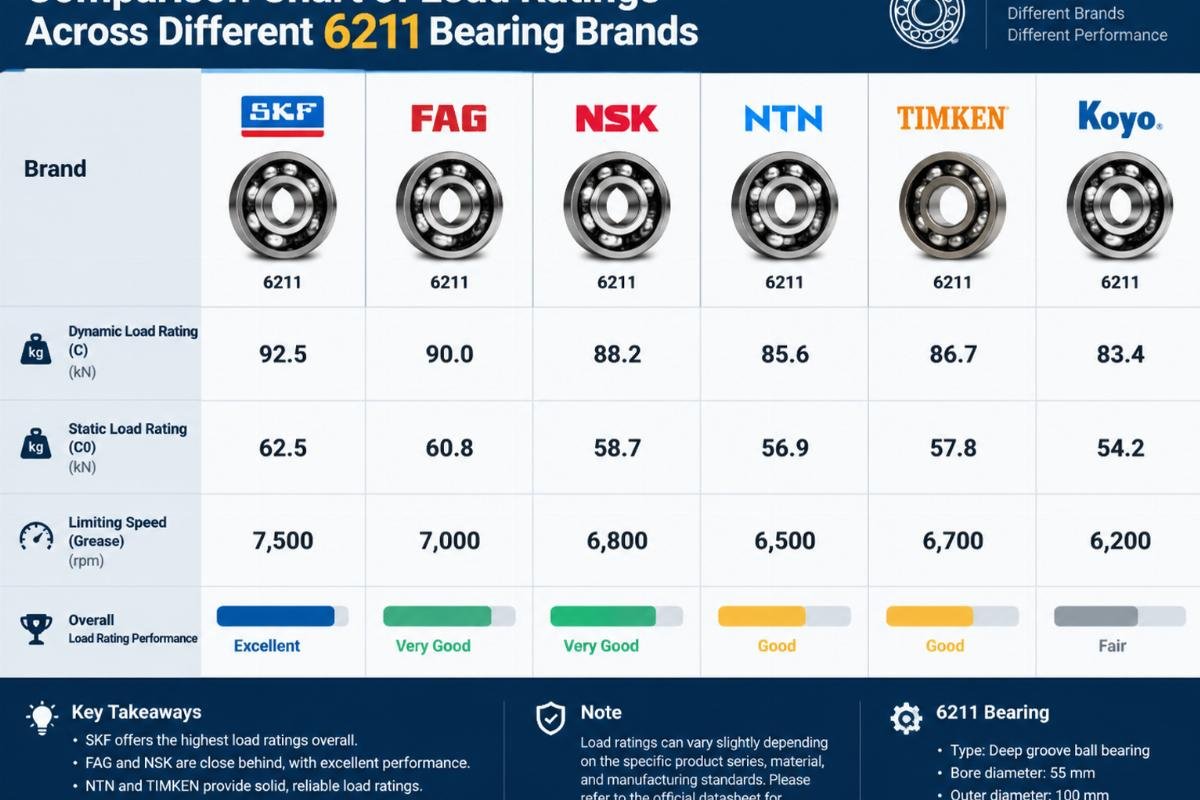
When you request a quote for a 6211 bearing, always ask for the specific dynamic load rating and clearance code. This ensures that the replacement part meets the mechanical demands of your specific application, not just the spatial constraints.
How Do You Map 6211 Cross-Brand Equivalents?
Matching part numbers is easy; matching internal quality is hard.
Cross-referencing a 6211 bearing across brands like SKF, FAG, NSK, or domestic lines like ZWZ and HRB requires more than a lookup table. It demands an understanding of how each manufacturer interprets international standards. While ISO standards provide a framework, individual brands have proprietary tolerances and material treatments that affect longevity.
A verified equivalent must match not only the dimensions but also the internal clearance and cage design. For instance, some brands use stamped steel cages as standard, while others might offer machined brass cages for higher-speed applications. Swapping a bearing with a different cage type without adjusting the operating parameters can lead to cage fracture or excessive heat generation.
Consider a scenario where a European distributor needed to consolidate a container load for a client in Southeast Asia. The client required genuine SKF bearings for critical spindle applications but was open to reliable domestic equivalents for general conveyor supports. By mapping the exact technical specifications, we sourced premium imported brands for the high-precision zones and certified domestic lines for the standard MRO needs. This mixed-brand approach optimized the budget without compromising safety. [NEED_CITE: best practices for mixed-brand bearing sourcing]
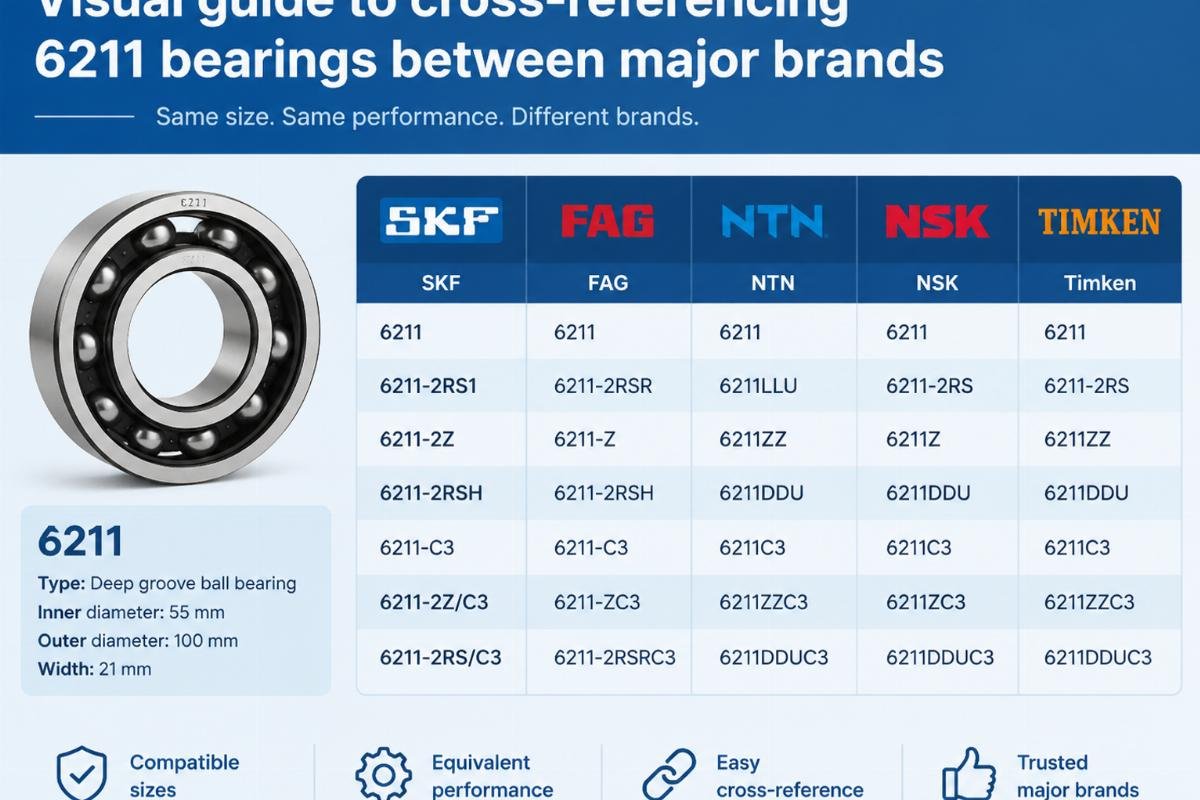
The key is traceability. When evaluating a 6211 bearing cross reference, ensure that the supplier can provide documentation proving the origin and material certification. This is particularly important when substituting premium brands with cost-effective alternatives. Without proper verification, you risk introducing components with inconsistent hardness or poor surface finish, which drastically reduces service life.
Why Do Cheap 6211 Substitutes Fail in Heavy Industry?
Substandard steel and poor heat treatment are silent killers.
The market is flooded with low-cost alternatives that look identical to premium products. However, under heavy industrial loads, these substitutes often fail catastrophically. The primary reasons are inferior steel purity and inadequate heat treatment processes.
High-quality bearing steel must have very low levels of non-metallic inclusions. These microscopic impurities act as stress concentrators, initiating cracks that propagate under cyclic loading. Premium manufacturers use vacuum degassing and other advanced refining techniques to minimize these inclusions. Cheaper alternatives often skip these steps to reduce costs, resulting in steel that is prone to early fatigue failure. [NEED_CITE: relationship between steel cleanliness and bearing life]
Heat treatment is another critical factor. The raceways and rolling elements must be hardened to a specific depth and uniformity to withstand contact stresses. Inconsistent hardening can lead to soft spots that deform under load, causing misalignment and increased vibration. In the case of the cement plant I mentioned earlier, the fractured inner ring showed signs of poor core hardness, which allowed the crack to propagate rapidly under shock loads.
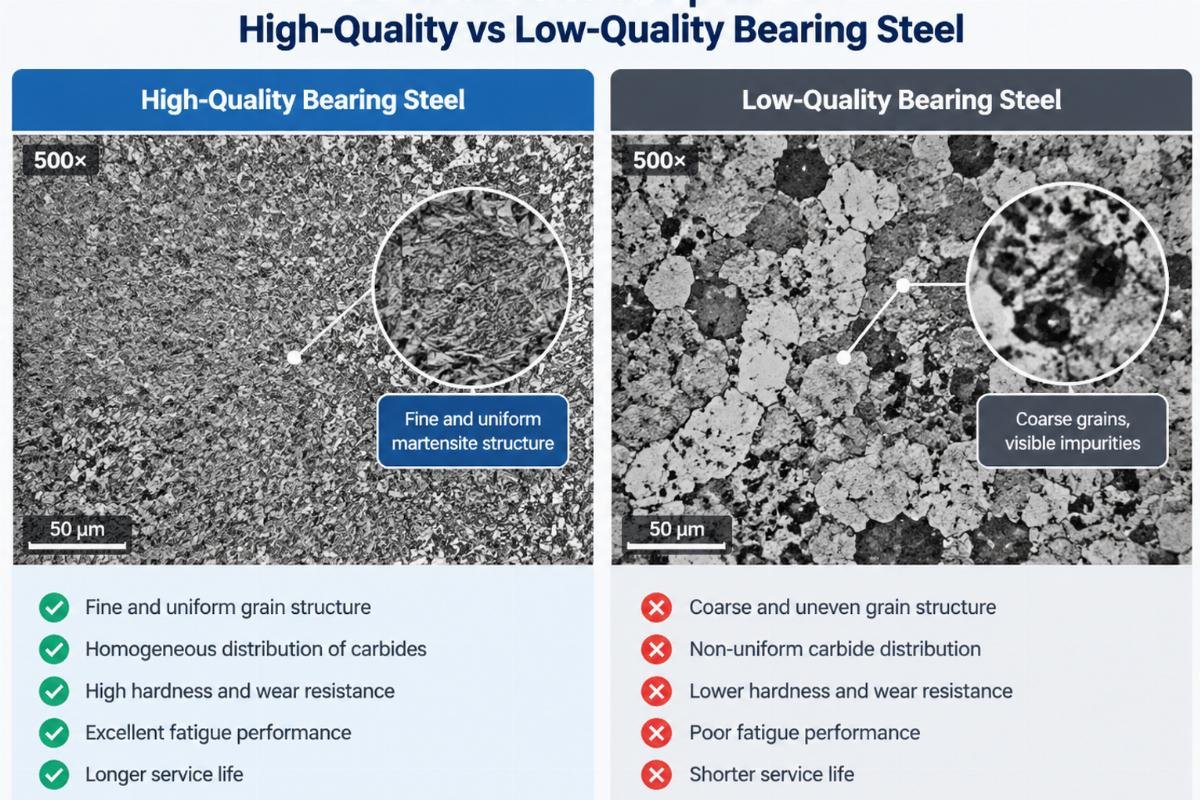
For MRO operators, the cost of downtime far exceeds the savings from buying cheaper parts. A failed 6211 bearing in a critical position can halt an entire production line, leading to losses that dwarf the initial purchase price difference. Therefore, investing in verified, high-quality equivalents is a strategic decision, not just an expense.
How to Source Genuine 6211 Equivalents for Bulk Orders?
Traceability and technical consultation are your best safeguards.
Sourcing genuine 6211 bearing equivalents for bulk orders requires a partner who understands both the technical specifications and the supply chain complexities. It is not enough to simply order by part number. You need a supplier who can provide full traceability documentation, ensuring that every batch meets the claimed standards.
Start by defining your application requirements clearly. Identify the load conditions, speed, temperature, and environmental factors. Use this data to select the appropriate clearance class and cage type. Then, work with your supplier to map these requirements to available brands. For critical applications, stick to premium global brands. For less demanding roles, consider reputable domestic manufacturers that comply with ISO standards and provide material certificates.
A successful sourcing strategy often involves mixed-container consolidation. This allows you to combine high-value premium bearings with cost-effective standard units in a single shipment. This approach reduces logistics costs and simplifies inventory management. However, it requires careful planning and a supplier who can manage the complexity of multi-brand orders. [NEED_CITE: benefits of consolidated shipping for industrial spare parts]
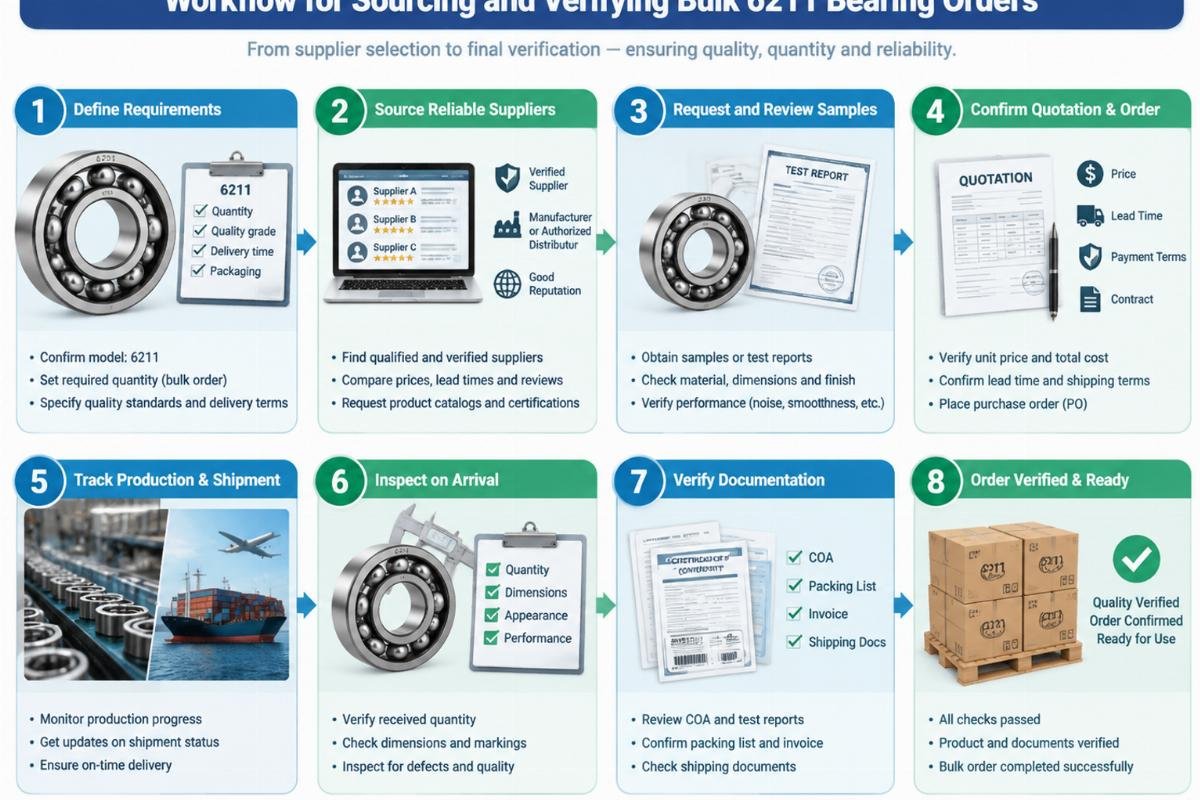
Always request sample verification for large orders. Inspect the packaging, markings, and physical condition of the bearings. Check for smooth rotation and absence of surface defects. If possible, conduct hardness tests or send samples for independent analysis. This due diligence protects your investment and ensures that the 6211 bearing you receive will perform as expected in the field.
Conclusion
Precision matters more than price when equipment reliability is on the line.
Selecting the right 6211 bearing involves looking beyond simple dimensions to understand load ratings, material quality, and manufacturing consistency. By prioritizing traceability and technical verification, buyers can avoid the hidden costs of premature failure. Whether sourcing premium global brands or reliable domestic equivalents, the goal is to match the bearing’s capabilities with the application’s demands. This approach ensures operational continuity and long-term value for industrial operations.
Share this article

Written by
author
Editor covering global sourcing, supplier verification, and industrial product knowledge. Content is compiled from manufacturer specifications, industry standards, and hands-on experience with international B2B buyers. Every article is fact-checked before publishing to help procurement professionals make informed decisions.
More articles by author

