Equivalent Bearings Cross-Reference for Distributor Catalogs – Wholesale Supplier
Master Equivalent Bearings Cross-Listing by verifying internal clearance and cage materials instead of relying on basic dimensions. Prevent costly equipment failures through rigorous structural audits and load rating checks. Build reliable distributor catalogs with verified technical data to ensure true functional compatibility for demanding industrial applications.
-
By author
- Updated
- 7 min read
Equivalent Bearings Cross-Reference for Distributor Catalogs – Wholesale Supplier
Identical outer and inner diameters do not guarantee a functional swap.
True bearing equivalence requires verifying internal clearance classes, cage material thermal limits, and dynamic load ratings beyond basic dimensional matching to prevent catastrophic equipment failure.
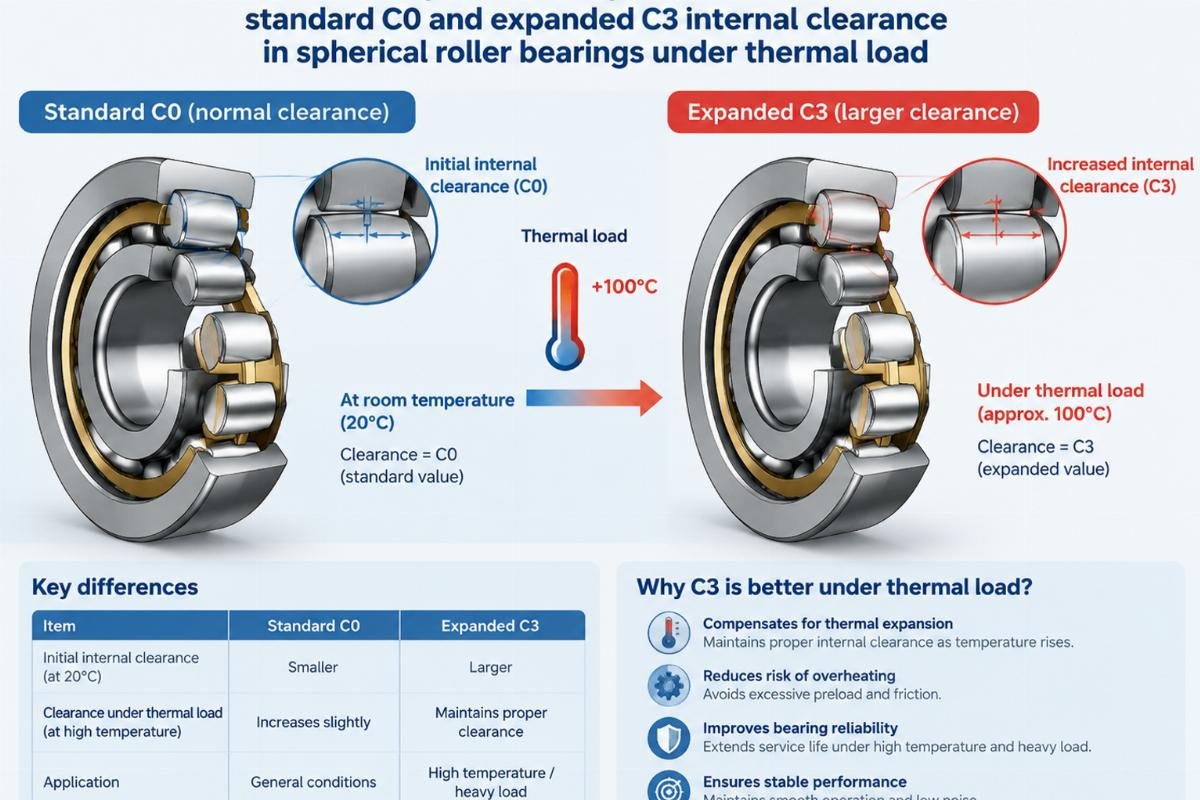
I still remember the humidity in Hanoi that afternoon. A steel mill production line had ground to a halt because a substituted spherical roller bearing seized within hours of installation. I had approved the replacement based solely on the catalog dimensions—outer diameter, inner diameter, and width matched perfectly. What I missed was the internal clearance specification. The original unit operated with a C3 clearance suitable for high-temperature expansion, while the substitute was a standard C0 class. As the housing heated up, the inner ring expanded against the shaft, eliminating all play and causing immediate seizure. That shutdown cost the client far more than the price difference between the two bearings. Since then, my approach to Equivalent Bearings Cross-Listing has shifted from simple dimension checking to a rigorous structural and operational audit. [NEED_CITE: ISO 15243 failure mode classification regarding thermal seizure]
This experience underscores a critical reality for distributors and MRO buyers: relying on basic size charts is a recipe for liability. To build a reliable catalog, you must look deeper into the engineering specifications that dictate performance in harsh environments.
Why Dimensional Matching Isn’t Enough for Bearing Equivalence?
External dimensions represent only a fraction of true bearing compatibility.
Many buyers assume that if a bearing fits physically, it will function mechanically. This is a dangerous misconception. While the boundary dimensions (Bore, OD, Width) are standardized globally under ISO 15, the internal architecture varies significantly between brands and even within series from the same manufacturer. [NEED_CITE: ISO 15 boundary dimension standards vs internal design variations]
The primary risk lies in the internal geometry. Two bearings may share the same outer shell but differ in roller profile, raceway curvature, and contact angles. These subtle differences affect load distribution and stress concentration. For instance, a slight variation in the logarithmic profile of a spherical roller can mean the difference between handling misalignment gracefully and experiencing edge loading that leads to premature spalling.
Furthermore, tolerances play a pivotal role. Standard ABMA or ISO tolerance classes define acceptable deviations, but premium brands often hold tighter internal controls that affect noise levels and vibration in high-speed applications. Substituting a precision-grade bearing with a standard commercial grade in a machine tool spindle will result in unacceptable runout, even if the physical dimensions are identical. [NEED_CITE: ABMA standard tolerance classes and their impact on rotational accuracy]
When compiling data for Equivalent Bearings Cross-Listing, ignoring these internal factors leads to a high rate of warranty claims. Distributors who merely map part numbers by size often find themselves replacing failed units repeatedly, damaging their reputation with end-users who expect reliability. The key is to recognize that dimensional fit is merely the entry ticket; operational integrity depends on the unseen internal design.

What Critical Parameters Must Be Checked in Cross-Listing?
Internal clearance, cage material, and seal types are non-negotiable verification points.
To avoid the pitfalls of simple dimension matching, three specific parameters must be rigorously checked during the cross-referencing process. These elements determine how the bearing interacts with its environment and load conditions.
First, internal clearance is vital for applications involving temperature fluctuations or heavy loads. As seen in the steel mill case, using a standard clearance bearing in a high-heat environment causes seizure. Conversely, using excessive clearance in a precision application leads to vibration and noise. Mapping clearance classes such as C2, C3, C4, or CN accurately is essential. [NEED_CITE: Guidelines for selecting internal clearance based on operating temperature and fit]
Second, cage material dictates speed limits and chemical resistance. Steel cages are robust but may corrode in wet environments or fail under extreme acceleration. Brass cages offer good strength but have lower temperature limits. Polymer cages, such as those made from PEEK or PA66, provide excellent weight reduction and corrosion resistance but may degrade under certain chemical exposures or high continuous temperatures. A mismatch here can lead to rapid cage disintegration, causing secondary damage to the rolling elements.
Third, seal and shield types must match the contamination level of the application. A rubber contact seal offers superior protection against dust and moisture but generates more heat and friction than a metal shield. In high-speed pump applications, substituting a sealed bearing for a shielded one can cause overheating due to friction, while the reverse substitution in a dirty mining environment invites contamination ingress.
| Parameter | Risk of Mismatch | Verification Requirement |
|---|---|---|
| Internal Clearance | Thermal seizure or excessive vibration | Match C-class to operating temp range |
| Cage Material | Disintegration or chemical degradation | Check thermal limit and chemical exposure |
| Seal Type | Overheating or contamination ingress | Verify speed limit and environmental severity |
By focusing on these technical details, distributors can ensure that their Equivalent Bearings Cross-Listing data reflects true functional equivalence rather than just physical similarity. This depth of verification protects both the supplier and the end-user from costly failures.

How to Build a Reliable Distributor Cross-Reference Matrix?
A structured matrix comparing load ratings and material specs prevents field failures.
Creating a useful cross-reference tool requires moving beyond simple part number swaps. A robust matrix should include dynamic and static load ratings, limiting speeds, and weight data. These parameters allow engineers to verify if the alternative bearing can handle the specific mechanical stresses of the application.
Dynamic load rating (C) determines the bearing’s fatigue life under rotating conditions. Static load rating (Co) is critical for applications with heavy stationary loads or shock loading. If an alternative bearing has a significantly lower load rating, it will fail prematurely even if it fits perfectly. Therefore, any cross-listing must flag discrepancies in these ratings clearly. [NEED_CITE: Methodology for calculating bearing fatigue life using dynamic load ratings]
Limiting speed is another crucial factor. It is determined by the bearing type, cage design, and lubrication method. Exceeding this li*kdown and material softening. A reliable matrix should note whether the speed limit is based on grease or oil lubrication, as this affects the practical operating range.
Weight differences, though often overlooked, can impact rotating mass and balance in high-speed assemblies. Significant deviations may require rebalancing of the rotor or shaft system. Including weight data helps maintenance teams anticipate such requirements.
| Specification Category | Importance Level | Action for Cross-Listing |
|---|---|---|
| Dynamic Load Rating | High | Flag if deviation exceeds acceptable threshold |
| Limiting Speed | High | Verify lubrication method and cage type |
| Weight | Medium | Note significant deviations for balancing checks |
| Lubrication Type | Medium | Specify grease or oil compatibility |
Building this matrix requires access to detailed technical catalogs from multiple manufacturers. It is not enough to rely on third-party databases that may contain outdated or incomplete information. Direct verification against manufacturer datasheets ensures accuracy. For distributors, investing time in building this detailed Equivalent Bearings Cross-Listing framework establishes trust with technical buyers who value precision over convenience.

Where to Source Verified Equivalent Bearings Globally?
Partnering with full-range suppliers ensures traceability and technical validation.
Finding bearings that meet strict cross-reference criteria requires more than just browsing online marketplaces. It demands a supply partner who understands the technical nuances of equivalence and can provide genuine products with complete documentation. Counterfeit or substandard bearings often mimic the appearance of premium brands but lack the internal quality controls necessary for reliable performance.
A reputable global supplier maintains direct relationships with major manufacturers such as SKF, FAG, NSK, NTN, TIMKEN, and KOYO, as well as reliable domestic lines. This broad portfolio allows for flexible sourcing strategies, whether the goal is cost reduction through validated alternatives or ensuring availability of hard-to-find premium brands. [NEED_CITE: Industry best practices for bearing supply chain traceability and authenticity verification]
Traceability is paramount. Each bearing should come with original packaging, batch numbers, and certificates of conformity. This documentation is essential for MRO clients who need to prove component quality for safety audits or warranty claims. Without it, even a technically correct substitution carries legal and operational risks.
Moreover, technical support is a key differentiator. Suppliers who offer cross-brand consultation can help buyers navigate complex equivalence questions. They can verify if a specific alternative meets the unique demands of an application, such as high-temperature resistance or corrosion protection. This level of service transforms a simple transaction into a strategic partnership.
For distributors serving diverse markets, from Middle East oil fields to Southeast Asian manufacturing hubs, having a single source for mixed-brand orders simplifies logistics. Consolidating shipments reduces freight costs and customs complexity. It also ensures consistent quality across the entire inventory, reducing the risk of introducing weak links into the supply chain.

When evaluating suppliers, look for those who prioritize technical accuracy in their Equivalent Bearings Cross-Listing services. They should be willing to provide detailed datasheets and engage in technical discussions about specific application requirements. This collaborative approach ensures that every bearing supplied is not just a physical fit, but a functional solution.
Conclusion
True equivalence is defined by internal structure, not just external size.
Successful cross-listing demands rigorous verification of clearance, cage material, and load ratings to ensure reliability. Partnering with technically proficient suppliers provides the traceability and expertise needed to maintain equipment uptime and avoid costly failures.
Tags
Share this article

Written by
author
Editor covering global sourcing, supplier verification, and industrial product knowledge. Content is compiled from manufacturer specifications, industry standards, and hands-on experience with international B2B buyers. Every article is fact-checked before publishing to help procurement professionals make informed decisions.
More articles by author