Price Protection Clauses for Long-Term Bearing Supply Wholesale
Price Protection Clauses for Long-Term Bearing Supply Wholesale require clear triggers and adjustment mechanisms to prevent margin erosion from raw material volatility. Use objective indices like LME steel data and official brand notices to verify changes, ensuring transparent risk sharing between buyers and suppliers.
-
By author
- Updated
- 8 min read

Price Protection Clauses for Long-Term Bearing Supply Wholesale
Fixed prices are not safe; they are fragile.
Price protection clauses in long-term bearing supply agreements must include clear trigger conditions and adjustment mechanisms to shield both buyers and suppliers from raw material and exchange rate volatility. Without these, rigid fixed prices often lead to supply ruptures or severe margin erosion when market costs spike.
I learned this the hard way in Shenzhen, handling documentation before moving into sales. The pitfalls in contract terms were far more treacherous than any customs inspection at the port. I once signed a long-term import agreement with a mining client in Dubai for industrial bearings. We locked in the price, thinking we were securing stability. Then, the brand manufacturer announced a price hike, coinciding with a sharp fluctuation in exchange rates. Because we had no price protection clause, we had to ship at the original agreed price. The result was a double-digit margin loss over half a year. That experience made it clear: a long-term supply agreement without a defined price adjustment mechanism is just digging a hole, no matter how thick the contract is. Today, let us break down how to set these clauses correctly for Price Protection Clauses for Long-Term Bearing Supply Wholesale.
Understanding the mechanics of these clauses is essential for regional distributors and heavy-industry OEMs seeking to mitigate financial risks. It is not about avoiding price changes entirely, but about managing them transparently.
What triggers a price protection clause?
Triggers must be objective, verifiable, and tied to external indices rather than subjective supplier claims.
A common mistake is leaving the trigger condition vague, such as “significant cost increase.” This leads to disputes. Instead, define specific thresholds based on recognized market indicators. For bearing procurement, the primary cost drivers are steel prices and energy costs. You should link the trigger to a public index, such as the London Metal Exchange (LME) steel index or a regional energy price benchmark.
For example, a clause might state that a price review is triggered if the LME steel index fluctuates by more than a certain percentage over a quarter. This removes ambiguity. [NEED_CITE: standard practices for raw material indexing in industrial supply contracts]
Currency fluctuation is another critical trigger, especially for cross-border trade. If your local currency depreciates significantly against the settlement currency (often USD or EUR), your purchasing power drops. A well-structured clause includes a currency hedging mechanism or a threshold for exchange rate movement that allows for price renegotiation.
Consider a Latin American MRO wholesaler I worked with. They secured a bulk order price lock-in during a period of steel price surges. By defining the trigger clearly, they avoided the spot market volatility that plagued their competitors. This gave them a significant cost advantage in their local resale market. The key was that the trigger was not just “costs went up,” but “the specific steel index moved beyond X%.”
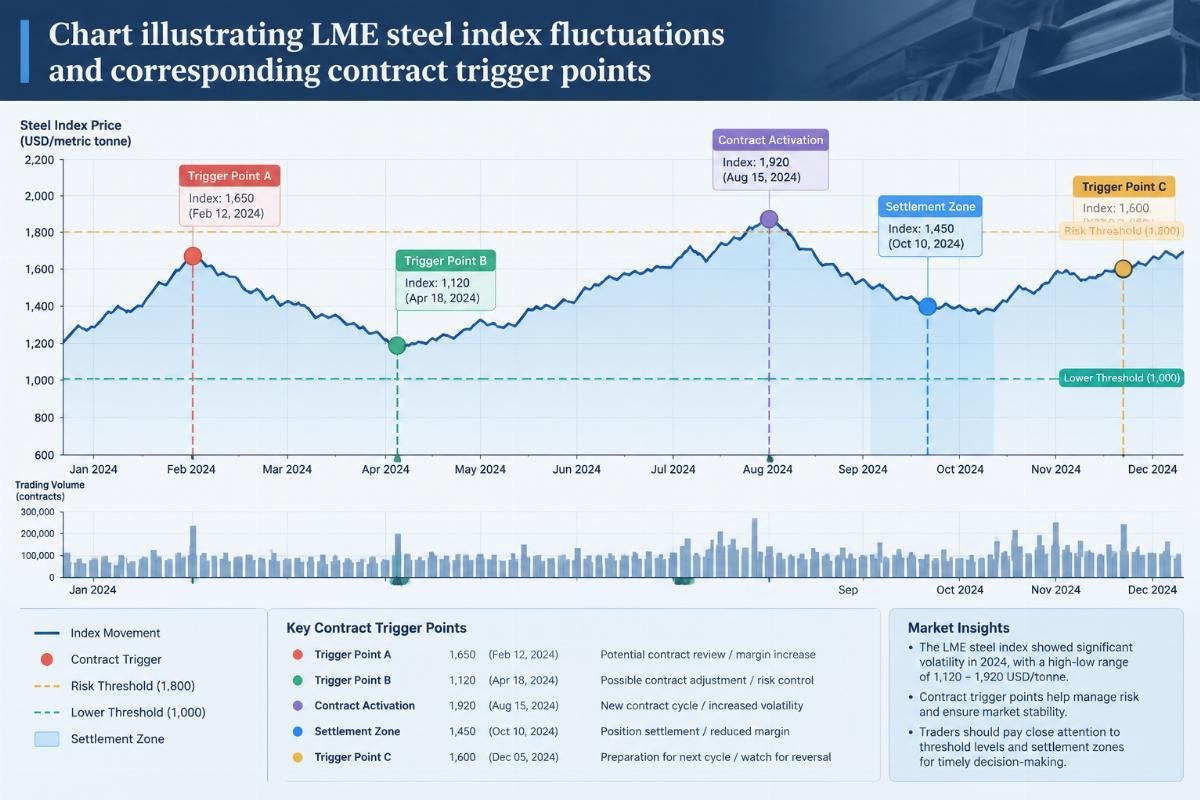
Without these objective triggers, you are at the mercy of the supplier’s internal cost accounting, which you cannot verify. Objective indices provide a neutral ground for both parties. This is crucial for Price Protection Clauses for Long-Term Bearing Supply Wholesale because it builds trust through transparency.
How to structure the price adjustment mechanism?
The adjustment formula must be transparent, predictable, and limited in scope to prevent excessive volatility.
Once a trigger is hit, how do you calculate the new price? A blind pass-through of all cost increases is dangerous for the buyer. Conversely, capping the supplier’s ability to recover costs can lead to quality cuts or supply denial. The solution is a formulaic approach.
A typical formula links the price change to the weighted impact of the raw material. For bearings, steel constitutes a major portion of the material cost. You might agree that only a percentage of the steel price increase is passed on, reflecting efficiency gains or shared risk. [NEED_CITE: methodologies for calculating raw material pass-through in manufacturing contracts]
For instance, a Southeast Asia OEM I advised used a quarterly index-linked adjustment for their heavy-duty roller bearings. They set a narrow tolerance band for quarterly reviews. If the index moved within the band, the price remained stable. If it moved outside, the price adjusted proportionally. This provided stability for their budgeting while allowing the supplier to manage extreme spikes.
Avoid complex formulas that require proprietary data from the supplier. Stick to public indices and simple multipliers. This ensures that both parties can independently verify the calculation. Complexity breeds distrust and delays negotiations.
| Adjustment Component | Description | Verification Source |
|---|---|---|
| Raw Material Index | Link to LME or regional steel index | Public exchange data |
| Currency Factor | Exchange rate movement threshold | Central bank rates |
| Pass-through Percentage | Portion of cost increase applied to price | Contractual agreement |
| Review Frequency | Quarterly or semi-annual review cycles | Contract schedule |
This structured approach prevents the “sticker shock” of sudden, unexplained price hikes. It also protects the supplier from absorbing unsustainable losses, ensuring they remain viable and committed to your orders. For Price Protection Clauses for Long-Term Bearing Supply Wholesale, this balance is vital for long-term partnership sustainability.

What documents verify price changes?
Verification requires traceability documentation and official brand price notices, not just informal emails.
When a supplier claims a price increase, you need proof. In the bearing industry, this means official price adjustment notices from the original manufacturer. Brands like SKF, FAG, NSK, or TIMKEN issue formal letters when they adjust global or regional pricing. These documents are the gold standard for verification.
However, relying solely on the brand’s notice is not enough if you are buying through a distributor. You need to ensure that the distributor is passing on the exact increase without adding an unauthorized margin. This is where traceability documentation becomes critical. Request the chain of documentation that links the brand’s price change to your invoice.
I recall a case where a distributor claimed a ten percent increase due to “logistics costs.” When asked for official documentation from the bearing manufacturer, they could not provide it. It turned out they were using the market situation as an excuse to improve their own margins. By insisting on official brand price notices, we negotiated the increase down to the actual verified amount.
[NEED_CITE: importance of supply chain transparency in industrial procurement]
Additionally, maintain records of previous invoices and the agreed-upon baseline price. This allows you to track the cumulative effect of adjustments over time. If you are sourcing mixed-brand bearings, ensure that each brand’s price change is documented separately. Do not allow a blanket increase across all brands unless each has issued a valid notice.
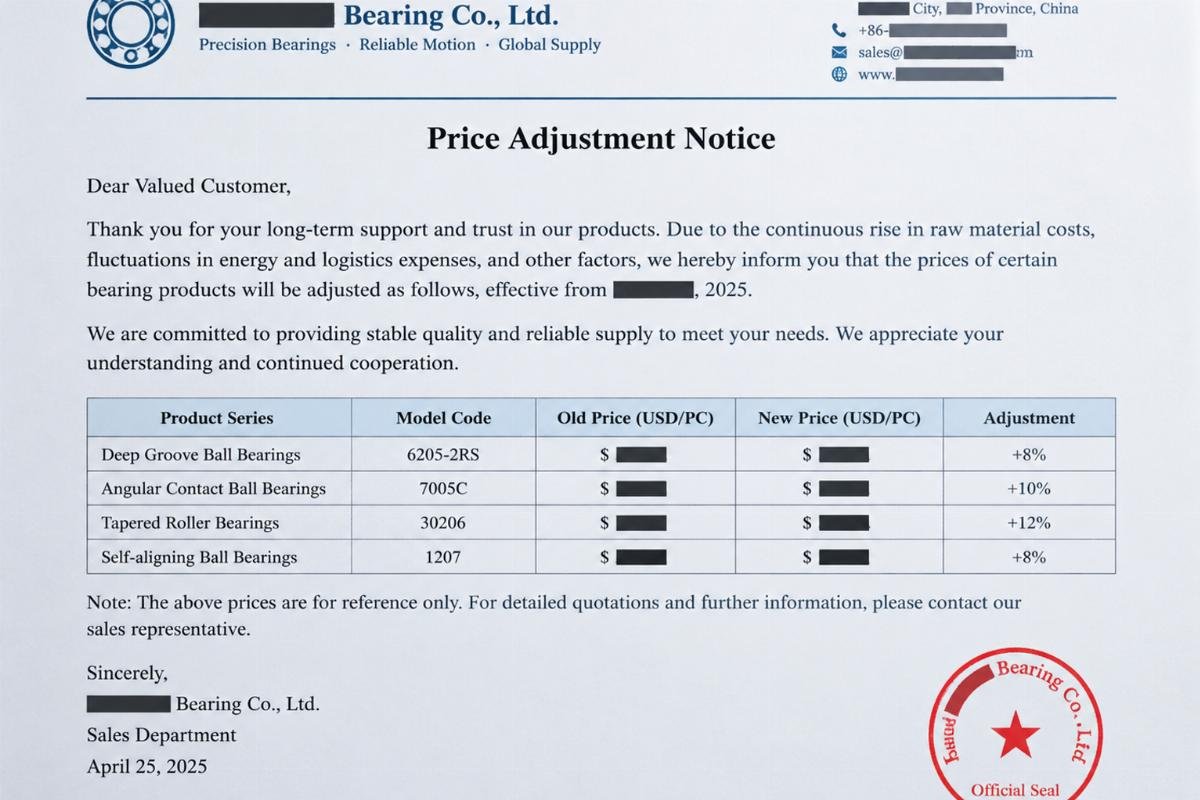
This level of documentation discipline protects your bottom line. It also signals to your suppliers that you are a professional buyer who understands the market. In the context of Price Protection Clauses for Long-Term Bearing Supply Wholesale, rigorous verification is your first line of defense against unjustified cost inflation.
How to balance risk in long-term bearing contracts?
Balance risk through MOQ flexibility and inventory buffering, not just price clauses.
Price protection clauses handle the financial aspect, but they do not solve supply availability issues. When raw material costs spike, suppliers may prioritize customers who offer better terms or larger volumes. To mitigate this, you need operational flexibility.
One effective strategy is negotiating flexible Minimum Order Quantities (MOQ). During periods of high volatility, being able to adjust your order size allows you to manage cash flow and inventory levels more effectively. If prices are rising, you might want to buy less frequently but in larger batches to lock in current prices. If prices are falling, you might prefer smaller, more frequent orders to benefit from lower future prices.
Another key element is inventory buffering. Maintaining a strategic stock of critical bearings can protect you from short-term supply disruptions and price spikes. However, holding inventory carries its own costs. The goal is to find the sweet spot where the cost of holding inventory is less than the risk of price volatility or stockouts.
We have seen how massive spot inventory can act as a physical buffer against price volatility. For clients who face urgent maintenance requirements, having access to a broad range of standard and special part numbers in stock means they do not have to panic-buy at premium prices during shortages. This physical availability complements the financial protection offered by price clauses.
| Risk Factor | Mitigation Strategy | Benefit |
|---|---|---|
| Price Volatility | Index-linked adjustment clauses | Predictable cost changes |
| Supply Shortage | Strategic inventory buffering | Continuity of operations |
| Cash Flow Pressure | Flexible MOQ negotiations | Better working capital management |
| Verification Disputes | Official brand price notices | Transparent cost basis |
Furthermore, consider the counter-intuitive view that price protection benefits suppliers too. It secures their priority allocation during global bearing shortages. Suppliers are more likely to honor contracts with fair adjustment mechanisms because they know they will not be forced to sell at a loss. This mutual benefit fosters a more resilient supply chain.
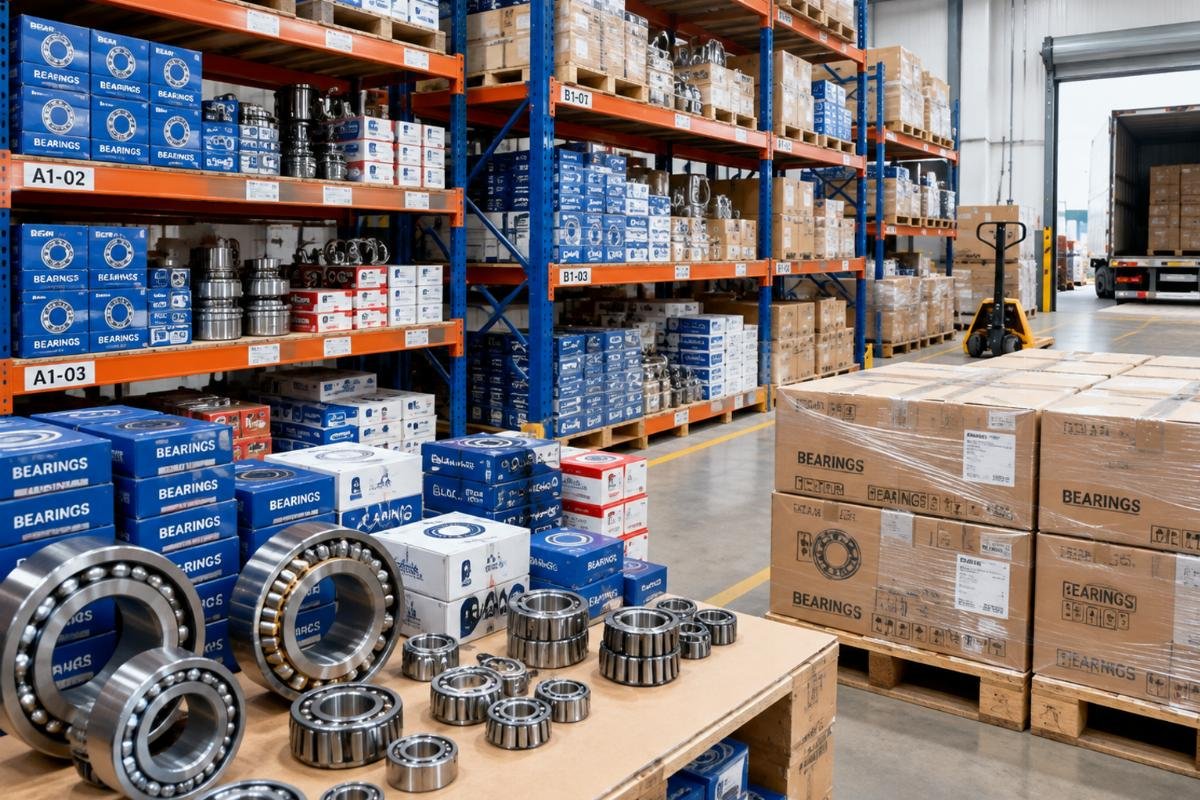
By combining financial clauses with operational flexibility, you create a robust framework for managing long-term supply risks. This holistic approach is what distinguishes sophisticated procurement strategies in Price Protection Clauses for Long-Term Bearing Supply Wholesale.
Conclusion
Price protection is about partnership, not just protection.
Effective clauses balance risk between buyer and supplier using objective triggers and transparent formulas. Verify every change with official documentation and support financial terms with operational flexibility. This approach ensures stability and trust in your long-term bearing supply chain.
Tags
Share this article

Written by
author
Editor covering global sourcing, supplier verification, and industrial product knowledge. Content is compiled from manufacturer specifications, industry standards, and hands-on experience with international B2B buyers. Every article is fact-checked before publishing to help procurement professionals make informed decisions.
More articles by author

