UCFL204 Flange Unit: Wholesale Supplier for Bulk Orders
Master the UCFL204 flange unit with precise 20mm bore and 90mm bolt spacing data to ensure perfect mechanical fit. Learn how dynamic load ratings dictate performance in agricultural and HVAC applications while avoiding costly customs delays through accurate HS code declarations and compliant packaging.
-
By author
- Updated
- 7 min read

UCFL204 Flange Unit: Wholesale Supplier for Bulk Orders
Bolt spacing matters more than bore size.
The UCFL204 flange unit is a compact, two-bolt insert bearing assembly featuring a 20mm bore, designed for light to medium-duty applications where space is constrained and mounting simplicity is critical. Its primary value lies in the standardized 90mm bolt hole spacing and robust cast iron housing, which provide stable alignment for conveyor rollers, agricultural machinery, and HVAC systems without requiring complex machining.
I still remember the silence on the other end of the line when a client in Dubai called. His production line had been stationary for weeks. The issue was not the bearing itself, but the paperwork and packaging associated with a mixed container of spare parts. We had shipped a batch of UCFL204 units alongside other sizes, but the wooden pallets lacked the specific fumigation certification required by the port authorities, and the HS code had been declared generically rather than specifically for mounted bearings. The resulting detention fees and demurrage costs quickly eclipsed the value of the cargo. That incident reshaped how I approach every bulk order. It is not enough to simply match the inner diameter; the logistical framework surrounding the physical product is equally vital for international trade. [NEED_CITE: common customs clearance delays due to incorrect HS code classification for mechanical parts]
Understanding the technical specifications is the foundation, but ensuring they arrive ready for installation requires a holistic view of supply chain compliance. Let us break down what makes this component tick and how to source it without the hidden headaches.
What Are the Core Dimensions of the UCFL204?
Precise mapping of the 20mm bore, 90mm bolt spacing, and 113mm total length ensures perfect mechanical fit.
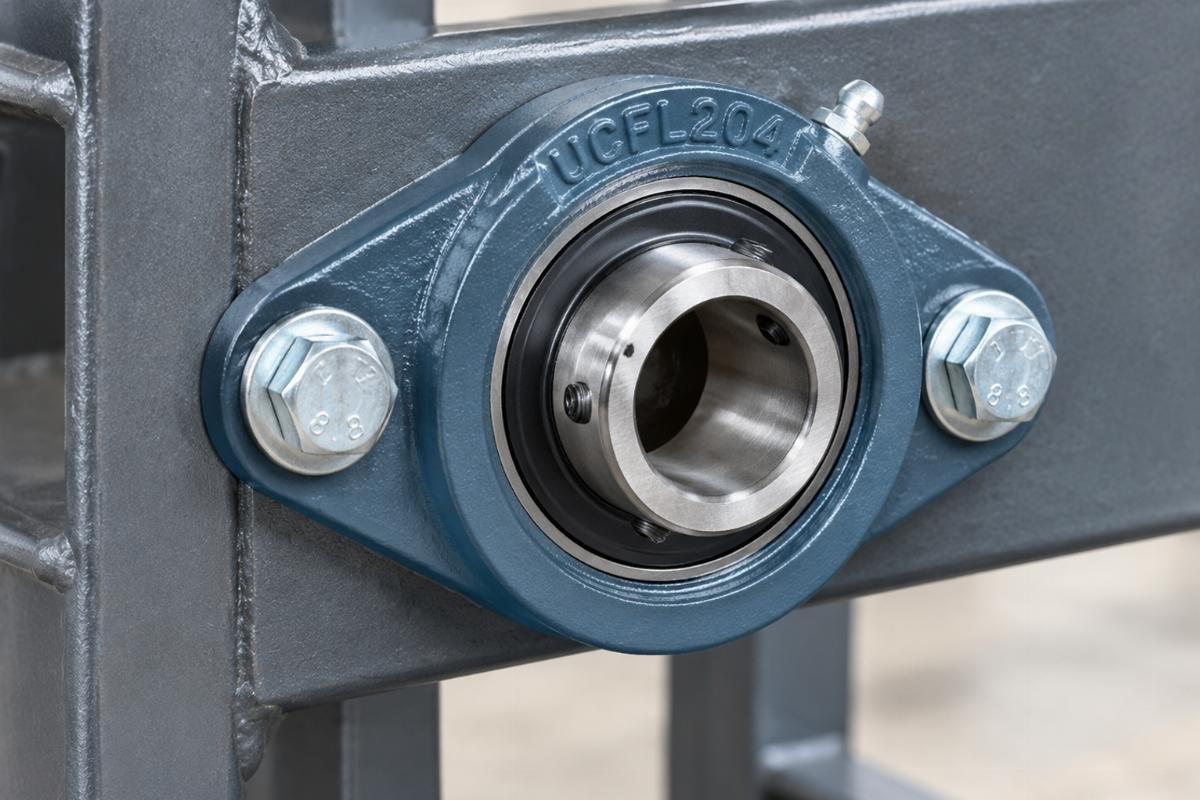
When procurement teams request a UCFL204 flange unit, they are often looking for a direct replacement. However, relying solely on the shaft diameter can lead to catastrophic mounting failures. The structural integrity of the assembly depends heavily on the flange geometry. The UCFL204 is part of the standard metric series, where the ’20’ denotes the 20mm bore diameter. But the ‘FL’ indicates a flanged housing with two bolt holes, which distinguishes it from four-bolt square flanges or round piloted blocks.
The critical dimension here is the bolt hole spacing. For the UCFL204, this is standardized at 90mm center-to-center. If the existing machinery base has worn or elongated holes, simply forcing a new unit into place will misalign the inner race, leading to premature fatigue. Additionally, the overall length of the housing is approximately 113mm, and the width is around 30mm. These dimensions dictate whether the unit will fit within the confined spaces of older agricultural equipment or compact conveyor frames.
| Dimension Parameter | Specification Value | Tolerance Class |
|---|---|---|
| Bore Diameter | 20 mm | Standard ISO [NEED_CITE: ISO tolerance standards for bearing bores] |
| Bolt Hole Spacing | 90 mm | Standard Mounting Pattern |
| Overall Length | 113 mm | General Casting Tolerance |
| Housing Width | 30 mm | General Casting Tolerance |
| Housing Material | Gray Cast Iron | Standard Grade |
A common mistake I see in retrofit projects is ignoring the height of the housing base. The UCFL204 has a specific base height that positions the shaft centerline. If this is off by even a millimeter, belt tensioners on conveyors will wear unevenly. We once assisted a manufacturer in Southeast Asia who was experiencing frequent belt slippage. The root cause was not the belt quality, but a non-standard replacement flange unit that altered the shaft center height. Switching back to a strictly compliant UCFL204 flange unit resolved the alignment issue immediately.
How Do Load Ratings Dictate UCFL204 Performance?
Analyzing dynamic and static load limits helps match the unit to actual operational stress.
Many buyers assume that all bearings with a 20mm bore can handle similar loads. This is a dangerous oversimplification. The UCFL204 flange unit contains an insert ball bearing, typically with a wide inner ring and set screws for locking onto the shaft. The load capacity is determined by the ball complement, the raceway geometry, and the housing strength.
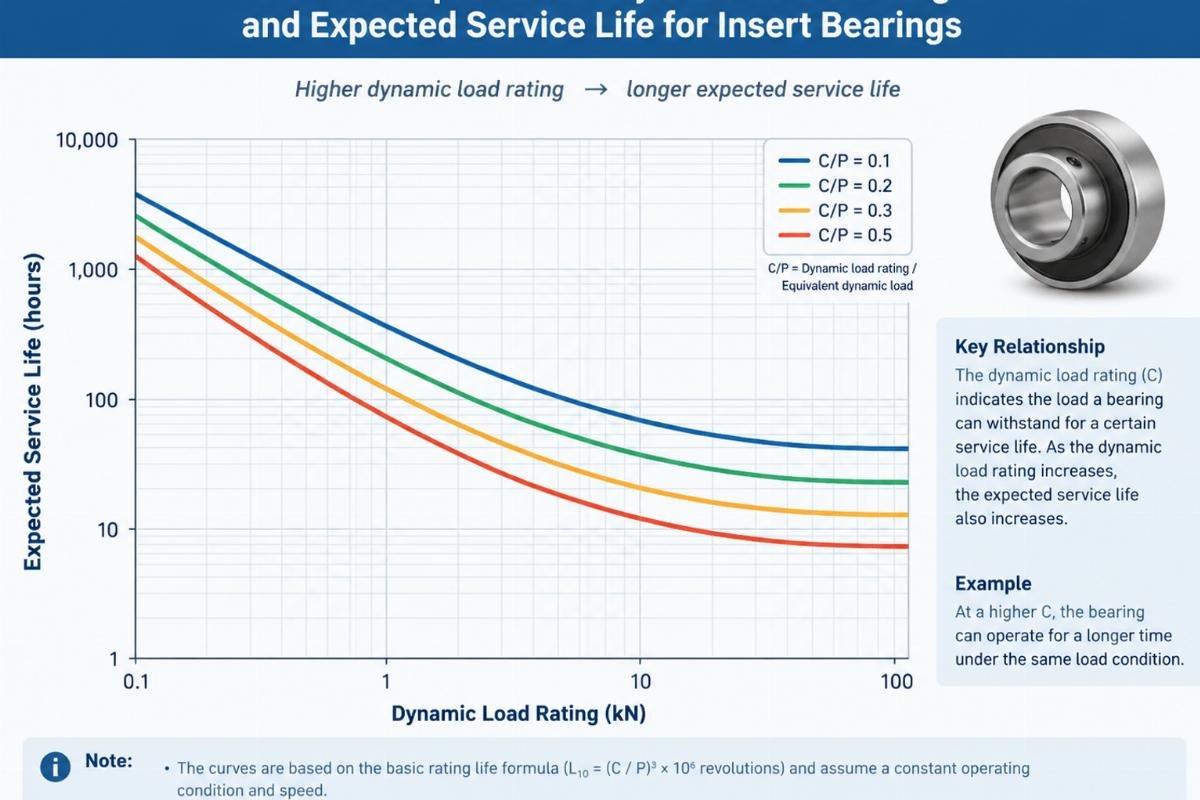
Dynamic load rating refers to the load a bearing can withstand for a million revolutions. For a UCFL204, this is sufficient for moderate speeds and continuous operation, such as in fan applications or light material handling. Static load rating, however, is crucial for applications where the shaft is stationary under load, such as in idler rollers or tensioning devices. Exceeding the static limit can cause permanent deformation of the rolling elements.
It is also essential to consider the housing material. The gray cast iron used in standard UCFL204 units provides good damping properties but has limited tensile strength compared to ductile iron or steel housings. In high-vibration environments, such as vibrating screens or crushers, the housing itself may crack before the bearing fails. Therefore, understanding the application environment is just as important as knowing the load numbers. [NEED_CITE: ABMA standards for insert bearing load ratings]
We recently worked with an OEM in Latin America designing a new line of agricultural conveyors. They initially specified a standard UCFL204 for all mounting points. However, our technical review highlighted that the discharge end experienced significant shock loads. By recommending a reinforced housing variant for those specific points while keeping the standard UCFL204 flange unit for the intermediate rollers, we helped them optimize cost without compromising reliability. This targeted approach prevented over-engineering the entire system while protecting the critical failure points.
Which Industries Benefit Most from UCFL204 Flange Units?
From agricultural conveyors to light HVAC fans, its compact design solves space-constrained mounting issues.
The versatility of the UCFL204 flange unit makes it a staple in several key industries. Its two-bolt design is particularly advantageous where mounting space is limited or where the load direction is primarily radial. In the agricultural sector, these units are ubiquitous in grain augers, hay balers, and small conveyor systems. The ability to easily replace the unit without removing the entire shaft assembly reduces downtime during harvest seasons.
In the HVAC industry, UCFL204 units are frequently used in fan coils and air handling units. The quiet operation of the insert bearing, combined with the stability of the flange mount, ensures consistent airflow and reduced noise pollution. Food processing plants also utilize these units, often with stainless steel variants or specialized seals, for washdown areas where corrosion resistance is paramount.
However, the most significant benefit is seen in maintenance, repair, and operations (MRO) scenarios. Because the UCFL204 is a standard part number across multiple global brands, it serves as a universal replacement for many older machines. This interchangeability simplifies inventory management for distributors and end-users alike. [NEED_CITE: industry usage statistics for insert bearings in agricultural machinery]
A European wind farm operator once faced a challenge with their auxiliary cooling systems. The original equipment manufacturer had gone out of business, leaving them without spare parts. By identifying the original specs as equivalent to a standard UCFL204 flange unit, we were able to source compatible replacements from our stock of premium brands. This quick identification saved them from having to redesign the entire cooling mount, demonstrating the value of standardized components in legacy equipment maintenance.

How to Avoid Procurement and Shipping Pitfalls?
Strict packaging checks and accurate customs declarations prevent expensive port delays and demurrage.
Sourcing bearings is straightforward; getting them through international borders efficiently is where many transactions fail. As mentioned earlier, my experience in Shenzhen taught me that the physical product is only half the equation. When ordering a UCFL204 flange unit in bulk, especially in mixed containers, attention to detail in documentation and packaging is non-negotiable.
First, consider the packaging. Bearings are precision components. Even minor impacts during transit can damage the races or dislodge the sealing shields. Professional suppliers use individual boxing within sturdy master cartons, often placed on fumigated wooden pallets for container loads. Non-fumigated wood is a major red flag for customs in many countries, including Australia, the US, and most of Europe. Ensuring your supplier provides valid fumigation certificates is a basic but critical step.
Second, the HS code declaration must be precise. Declaring bearings under a generic machinery code can trigger inspections and delays. The correct classification for mounted ball bearings is specific and varies slightly by region. Working with a supplier who understands these nuances can save days of port detention. [NEED_CITE: World Customs Organization guidelines for bearing classification]
Finally, consolidation services offer significant cost savings but introduce complexity. Mixing UCFL204 units with other sizes requires careful palletizing to prevent crushing. A well-planned loading plan maximizes container space while protecting the cargo. We always recommend a pre-shipment inspection for large orders to verify quantities and packaging integrity before the container doors are sealed. This proactive measure eliminates disputes upon arrival and ensures that the UCFL204 flange unit you ordered is exactly what you receive.

Conclusion
Precision in specification and logistics defines successful procurement.
The UCFL204 flange unit is a reliable solution for many industrial applications, but its effectiveness depends on correct selection and seamless supply chain execution. By focusing on dimensional accuracy, load requirements, and rigorous shipping protocols, buyers can ensure operational continuity and cost efficiency.
Share this article

Written by
author
Editor covering global sourcing, supplier verification, and industrial product knowledge. Content is compiled from manufacturer specifications, industry standards, and hands-on experience with international B2B buyers. Every article is fact-checked before publishing to help procurement professionals make informed decisions.
More articles by author

