HRB Bearings: Product Range & Equivalents Wholesale Supplier
HRB Bearings Product Range and Equivalents offer verified alternatives to premium brands, enabling cost-effective mixed-brand procurement without compromising quality. Discover how HRB E-type spherical rollers match global load capacities and learn strategies to minimize downtime through reliable cross-referencing and spot inventory consolidation.
-
By author
- Updated
- 8 min read
HRB Bearings: Product Range & Equivalents Wholesale Supplier
Waiting for a single premium brand often costs more than the bearing itself.
HRB bearings provide a comprehensive product range with verified equivalents to global premium brands, enabling industrial buyers to execute cost-effective mixed-brand procurement strategies without compromising operational reliability or dimensional precision. This approach leverages spot inventory availability and rigorous traceability documentation to mitigate supply chain risks inherent in single-source dependency.
I still recall the silence of a crushing plant in the American Midwest. It was not the peaceful kind. The main drive shaft had seized, and the replacement spherical roller bearing was stuck in customs, delayed by a paperwork discrepancy from a European manufacturer. The line was down, burning through cash every minute. I had spent years in Chicago industrial procurement, believing that sticking strictly to one prestigious label was the only way to avoid liability. That belief crumbled when I saw the production loss tally. Later, when I shifted my focus to bearing supply, I realized that the fear of domestic alternatives was often rooted in outdated perceptions rather than current manufacturing realities. Today, I look at specifications, not just logos. When I advise clients on sourcing, I start by showing them the real cost of waiting, then present how HRB bearings fit into a resilient, mixed-brand strategy. [NEED_CITE: impact of unplanned downtime on MRO budgets]
The market has changed. Buyers are no longer just looking for a part; they are looking for certainty. Whether you are stocking shelves for regional distribution or managing emergency repairs for a mining operation, the ability to cross-reference and substitute with confidence is key. This guide breaks down how HRB bearings align with global standards and how integrating them into your supply chain can solve urgent maintenance needs.
What is the Full Product Range of HRB Bearings?
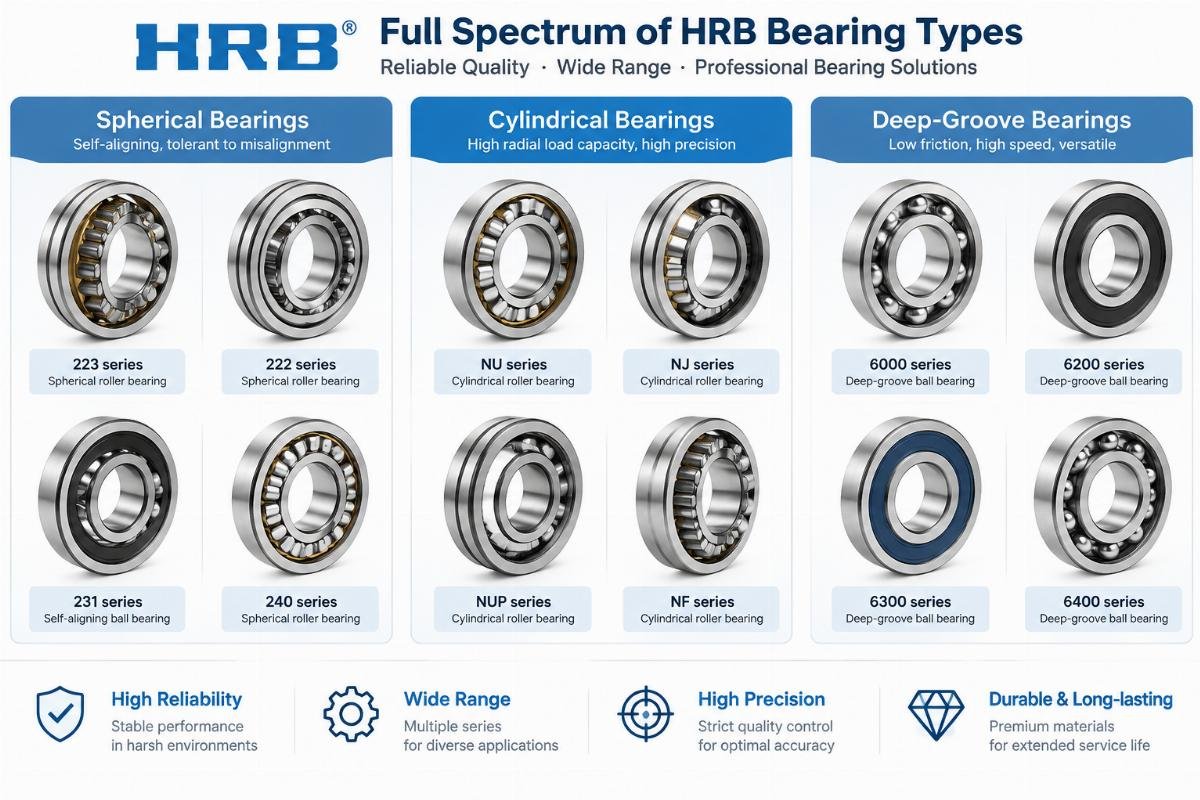
HRB covers the essential spectrum of industrial bearing types, matching global catalog standards for dimensional interchangeability.
For many distributors, the hesitation to adopt a new brand stems from uncertainty about coverage. You need to know if they have the specific deep-groove ball bearing for a high-speed motor or the heavy-duty cylindrical roller for a gearbox. HRB’s portfolio is extensive, designed to serve the same applications as the major international players. Their range includes deep-groove ball bearings, spherical roller bearings, cylindrical roller bearings, angular contact ball bearings, tapered roller bearings, thrust bearings, needle bearings, and insert bearings. [NEED_CITE: standard bearing type classification per ISO 15]
This breadth is critical for MRO buyers who deal with diverse machinery. A cement plant, for instance, does not run on one type of bearing. It uses thousands, from small precision units in control systems to massive rollers in kiln drives. Having a supplier that can provide genuine products across this entire spectrum simplifies procurement. Instead of managing five different vendor relationships for different bearing types, you can consolidate.
The consistency across this range is what matters most. When we talk about equivalents, we are not talking about approximate fits. We are talking about bearings manufactured to strict tolerances that allow them to drop into existing housings without modification. For OEMs building new machinery, this means the design phase can accommodate flexible sourcing options. For aftermarket suppliers, it means you can offer replacements for a wider variety of equipment without holding excessive stock of slow-moving premium brands. The key is verifying that the specific series you need, such as the E-type spherical rollers, meets the load capacity requirements of your application. [NEED_CITE: load rating calculation methods for spherical roller bearings]
How Do HRB Equivalents Compare to SKF or FAG?
A direct comparison reveals that HRB E-type spherical rollers offer equivalent load capacity and dimensional interchangeability with premium global brands.
The most common question I hear is whether a Chinese bearing can truly match the performance of a Swedish or German counterpart. The answer lies in the data, not the marketing. Let’s look at the critical factors that determine bearing performance: dimensional tolerance, load capacity, and material quality.
| Feature | Premium Global Brands (e.g., SKF, FAG) | HRB Bearings (E-Type Series) | Verification Method |
|---|---|---|---|
| Dimensional Tolerance | P0 to P5 Precision Classes | P0 to P5 Precision Classes | Caliper/Micrometer Check per ISO 492 |
| Load Capacity | High Dynamic/Static Ratings | Equivalent Dynamic/Static Ratings | Catalog Cross-Reference Comparison |
| Material Quality | Vacuum Degassed Steel | Controlled Nitrogen Infusion Steel | Material Certification Review |
| Traceability | Full Batch Documentation | Full Batch Documentation | Serial Number Lookup |
The table above highlights that the fundamental engineering parameters are aligned. HRB’s upgraded E-type spherical rollers, for example, are designed with optimized internal geometry to handle heavy loads and misalignment, just like their European counterparts. The difference often comes down to price and lead time, not performance. [NEED_CITE: comparative fatigue life testing standards]
I once worked with a European wind farm operator who was skeptical about switching any component in their turbine gearboxes. They were facing long lead times for their specified cylindrical rollers. We proposed a trial using HRB equivalents for a non-critical auxiliary drive. The key was providing full traceability documents and allowing their engineering team to verify the dimensional tolerances upon receipt. The bearings performed flawlessly, matching the batch-to-batch consistency they expected. This experience reinforced that when specs are verified, the brand origin becomes secondary to the technical data.
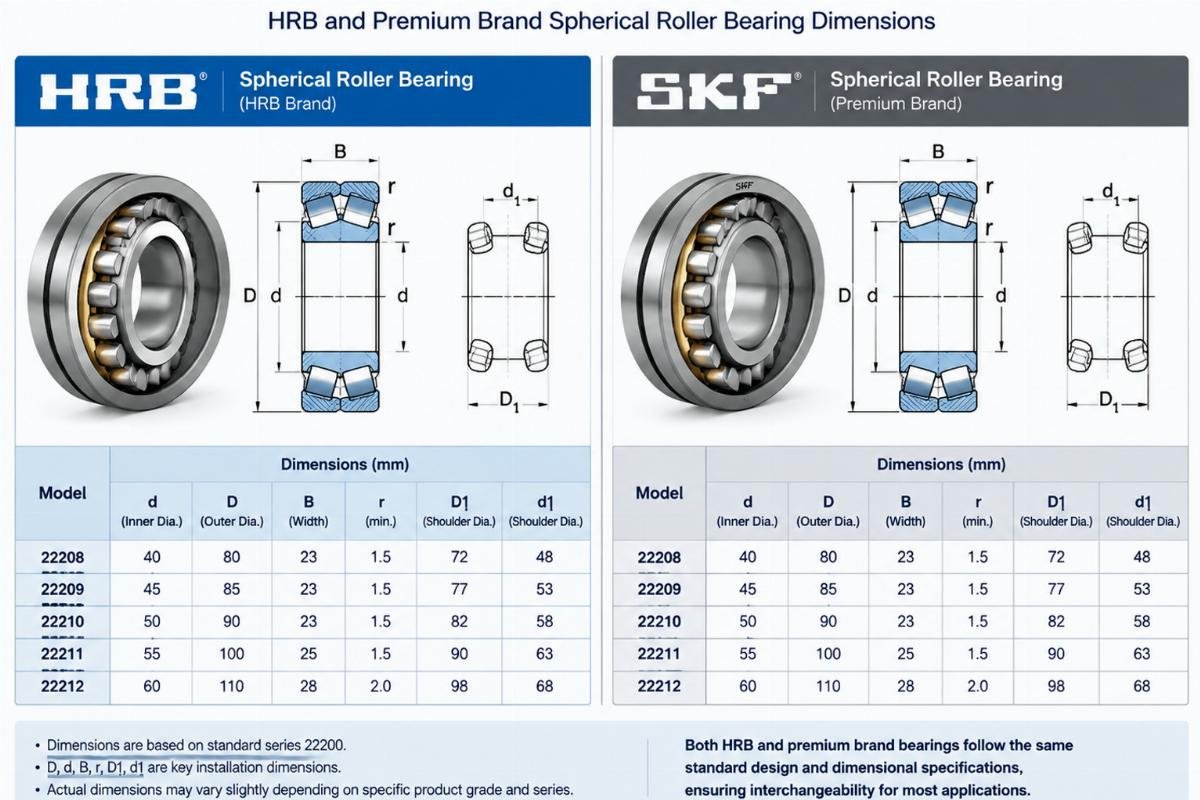
It is important to note that “equivalent” does not mean “identical in every microscopic detail.” Different manufacturers may use slightly different heat treatment processes or cage designs. However, for the vast majority of industrial applications, these differences do not impact operational life if the bearing is selected correctly for the load and speed conditions. The focus should be on whether the bearing meets the required ISO standards for your specific application. [NEED_CITE: ISO standards for bearing interchangeability]
Why Choose Mixed-Brand Sourcing for MRO?
Combining HRB spot inventory with premium brands minimizes downtime and reduces overall procurement costs.
Single-brand sourcing is a luxury that few industrial operations can afford in today’s volatile supply chain environment. Relying on one manufacturer leaves you vulnerable to their production delays, logistics bottlenecks, or price hikes. Mixed-brand sourcing offers a strategic advantage by diversifying risk.
Consider a mining operation in Africa. They keep critical spares for their crushers. If they only stock one premium brand, and that brand has a six-month lead time due to global demand spikes, they are forced to keep expensive safety stock or risk prolonged downtime. By integrating HRB bearings into their inventory, they can maintain a leaner stock of premium brands for ultra-critical, hard-to-replace positions, while using HRB equivalents for high-wear, easily accessible components. This balance optimizes capital expenditure without sacrificing reliability.
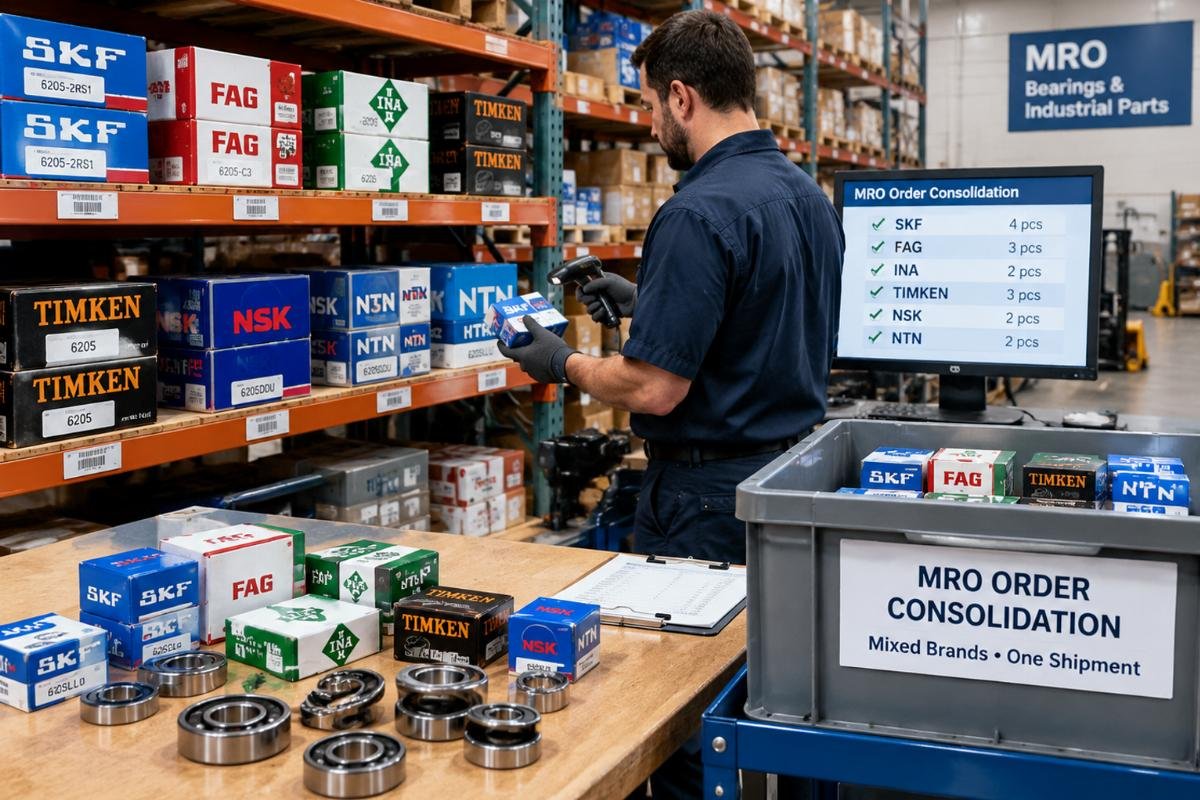
From a logistics perspective, mixed-brand consolidation is a game-changer. Instead of waiting for multiple partial shipments from different suppliers, you can consolidate a full container load with a mix of brands and sizes. This reduces shipping costs per unit and simplifies customs clearance. I have seen distributors in Southeast Asia reduce their total landed cost significantly by substituting slow-moving premium SKUs with HRB equivalents that are readily available in spot inventory.
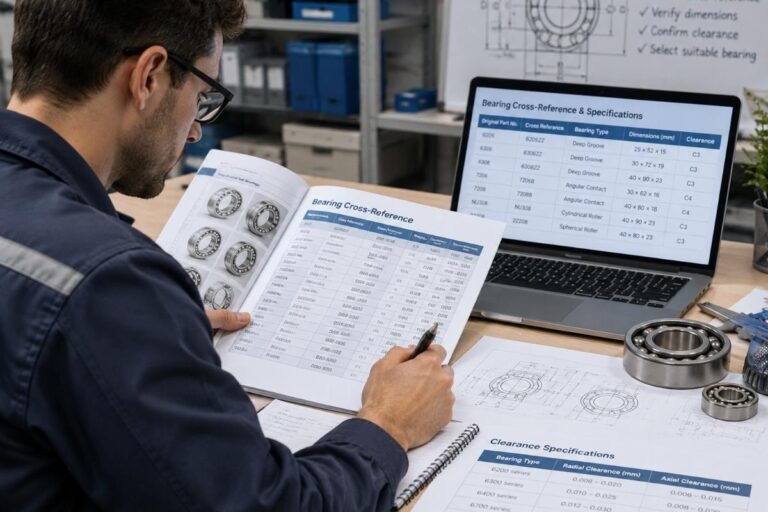
The key to successful mixed-brand sourcing is technical support. You need a partner who can help you identify the correct cross-references. It is not enough to just swap part numbers. You need to ensure that the alternative bearing has the same clearance class, cage material, and lubrication requirements. This is where having a supplier with deep technical expertise becomes invaluable. They can guide you through the selection process, ensuring that every substitution is technically sound. [NEED_CITE: best practices for multi-vendor MRO inventory management]
How to Verify HRB Bearing Authenticity and Quality?
Requesting traceability documents and checking official packaging ensures genuine quality for critical applications.
Fear of counterfeit or substandard goods is a valid concern in the global bearing market. However, this risk is not unique to any single country of origin. It exists wherever there is high demand and complex supply chains. The solution is not to avoid certain brands, but to implement rigorous verification protocols.
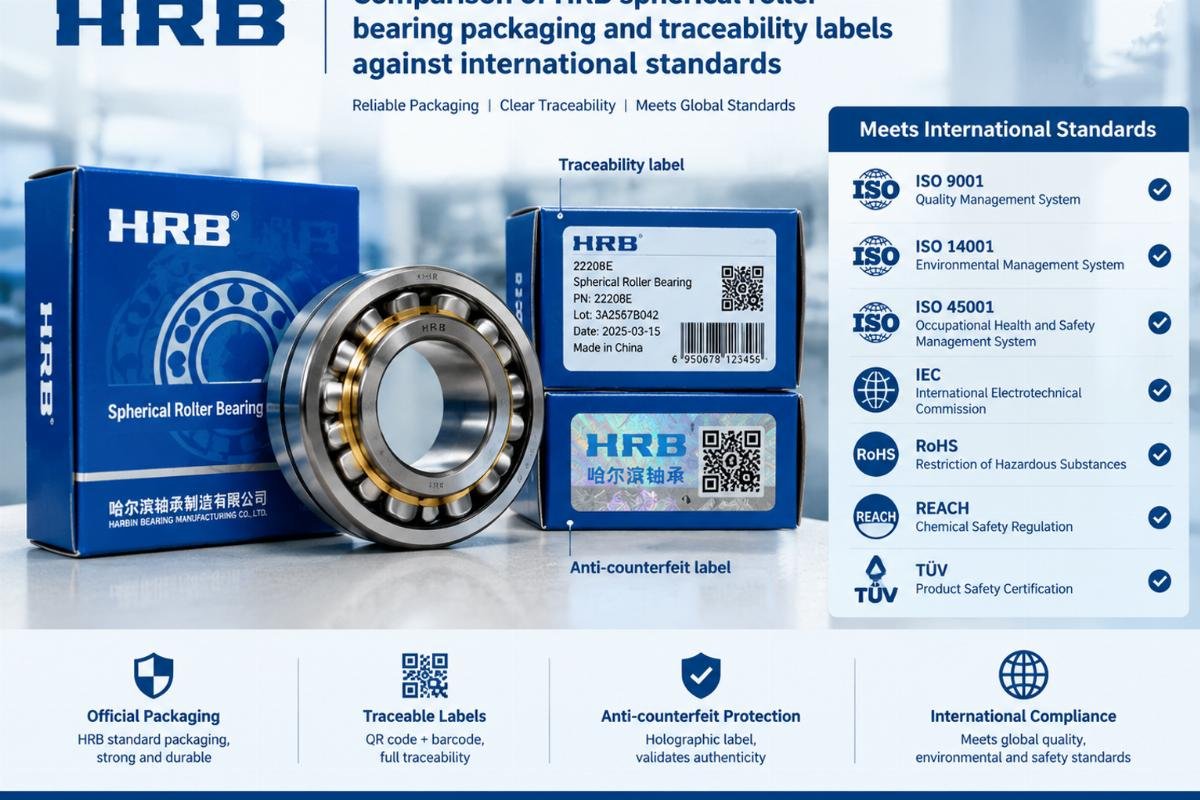
When sourcing HRB bearings, always request the original traceability documentation. This includes material certificates, heat treatment records, and quality inspection reports. Genuine HRB products come with clear labeling and packaging that includes batch numbers and manufacturing dates. These details allow you to track the bearing back to the manufacturer’s production facilities.
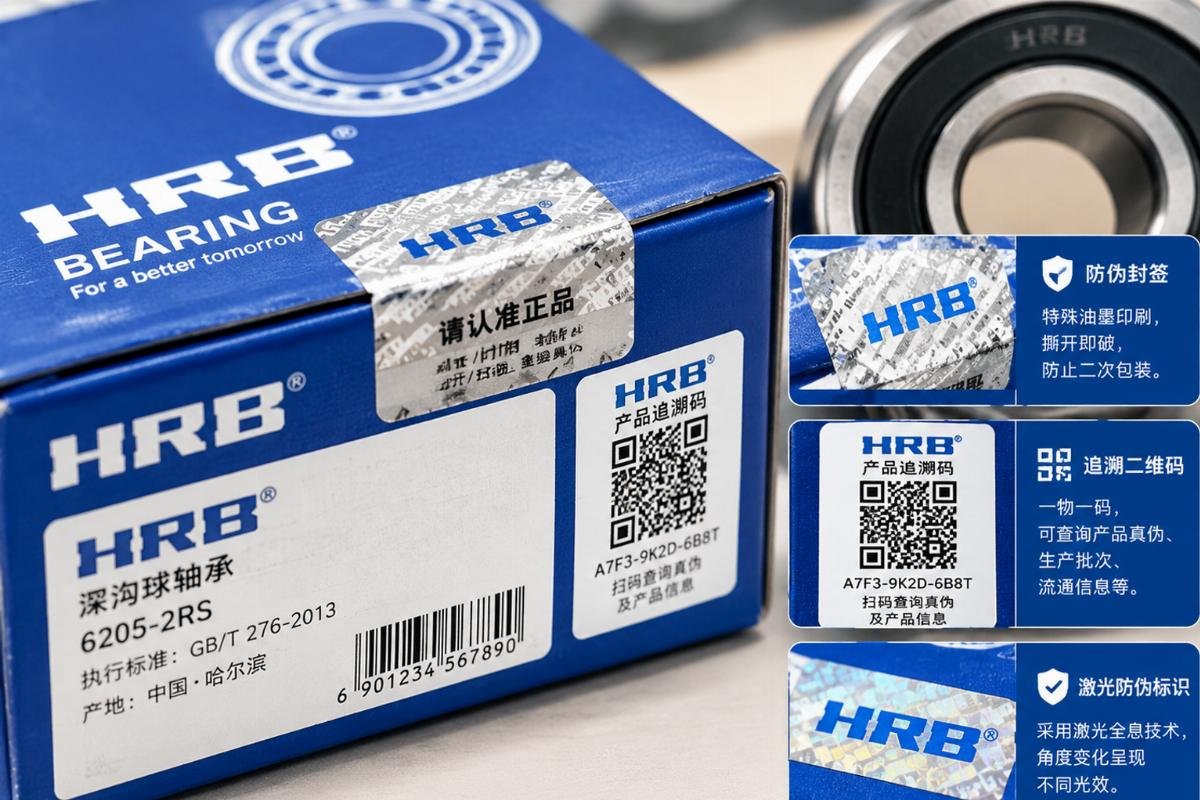
I recommend performing spot verification on incoming shipments. Use simple tools like micrometers to check critical dimensions against the catalog specifications. Check the surface finish for any signs of poor machining. Listen for noise during manual rotation. These basic checks can catch obvious defects before the bearings are installed. For critical applications, consider sending samples to an independent lab for further analysis.
Another layer of protection is buying from authorized or reputable distributors. Avoid unknown online marketplaces where provenance is unclear. A professional supplier will be transparent about their sourcing channels and willing to provide proof of authenticity. They understand that trust is built on transparency, not just low prices. [NEED_CITE: anti-counterfeiting measures in the bearing industry]
In my experience, the buyers who suffer most from quality issues are those who prioritize price over process. They skip the verification steps to save a few dollars, only to pay much more later in repairs and downtime. Taking the time to verify authenticity upfront is a small investment that pays large dividends in reliability.
Conclusion
Smart procurement is about balancing cost, availability, and verified quality.
HRB bearings offer a viable, high-quality alternative to premium global brands, particularly when integrated into a mixed-brand sourcing strategy. By focusing on technical specifications, verifying traceability, and leveraging spot inventory, industrial buyers can reduce costs and minimize downtime. The shift from single-brand dependency to flexible, spec-driven sourcing is not just a cost-saving measure; it is a resilience strategy for modern industrial operations.
Tags
Share this article

Written by
author
Editor covering global sourcing, supplier verification, and industrial product knowledge. Content is compiled from manufacturer specifications, industry standards, and hands-on experience with international B2B buyers. Every article is fact-checked before publishing to help procurement professionals make informed decisions.
More articles by author