Reduce Emergency Orders: Planned Maintenance Bearing Supplier
Implementing planned maintenance for bearings reduces emergency orders by addressing root causes like improper lubrication rather than product quality. Shift from reactive panic buying to strategic inventory management with condition-based monitoring to minimize unplanned downtime and significantly lower total operational costs in heavy industries.
-
By author
- Updated
- 7 min read
Reduce Emergency Orders: Planned Maintenance Bearing Supplier
Most emergency bearing failures are not caused by poor product quality.
Implementing a rigorous planned maintenance schedule with correct lubrication and condition-based monitoring is the most effective method to reduce emergency bearing orders and minimize unplanned downtime in heavy industries. This approach shifts procurement from reactive panic buying to strategic inventory management, significantly lowering total operational costs.
I still remember the silence in a Nigerian quarry that was louder than the crushers. The main shaft of a primary crusher had seized, stopping the entire production line. The local team blamed the bearing quality, pointing fingers at the brand label. But when I inspected the failed spherical roller bearing, the issue was clear: the grease had hardened into a black, abrasive paste due to excessive heat and extended intervals between relubrication. The owner demanded an immediate replacement, forcing us to air-freight a single unit from Europe. The shipping cost alone exceeded the profit margin of several containers of bearings, and the downtime lasted days. That incident changed how I view supply chains. It was not a failure of the metal; it was a failure of the process. Since then, I have helped numerous clients transition from chaotic emergency buying to structured planned maintenance for bearings, focusing on root causes rather than just swapping parts.
Transitioning to a proactive strategy requires understanding why these failures occur and how to prevent them through systematic care.
Why Do Emergency Bearing Failures Keep Happening?
Root causes often lie in lubrication gaps and operating condition mismatches, not product quality.
In heavy industries like mining and cement production, bearings operate under extreme loads, contamination, and temperature fluctuations. When a bearing fails prematurely, the immediate assumption is often that the component was defective. However, industry data suggests that the majority of premature bearing failures are attributed to improper lubrication or incorrect selection for the specific application environment [NEED_CITE: root cause distribution per ISO 15243].
Lubrication is the lifeblood of any rolling element bearing. It separates the moving surfaces, reduces friction, and helps dissipate heat. When lubrication intervals are based on generic calendar dates rather than actual operating hours or temperature readings, the lubricant can degrade, lose its viscosity, or become contaminated with dust and moisture. In a dusty aggregate quarry, for instance, standard grease seals may not be sufficient, leading to rapid contamination if the relubrication frequency is too low. Conversely, over-lubrication can cause churning and overheating, which damages the bearing internals just as quickly as starvation.
Another common issue is the misapplication of bearing types. Using a deep-groove ball bearing in an application with significant misalignment or heavy shock loads, where a spherical roller bearing would be more appropriate, leads to premature wear. This mismatch often occurs during initial equipment design or when replacements are sourced without technical verification. By analyzing the load, speed, and environmental conditions, engineers can select bearings that match the operational reality, thereby extending service life meaningfully.
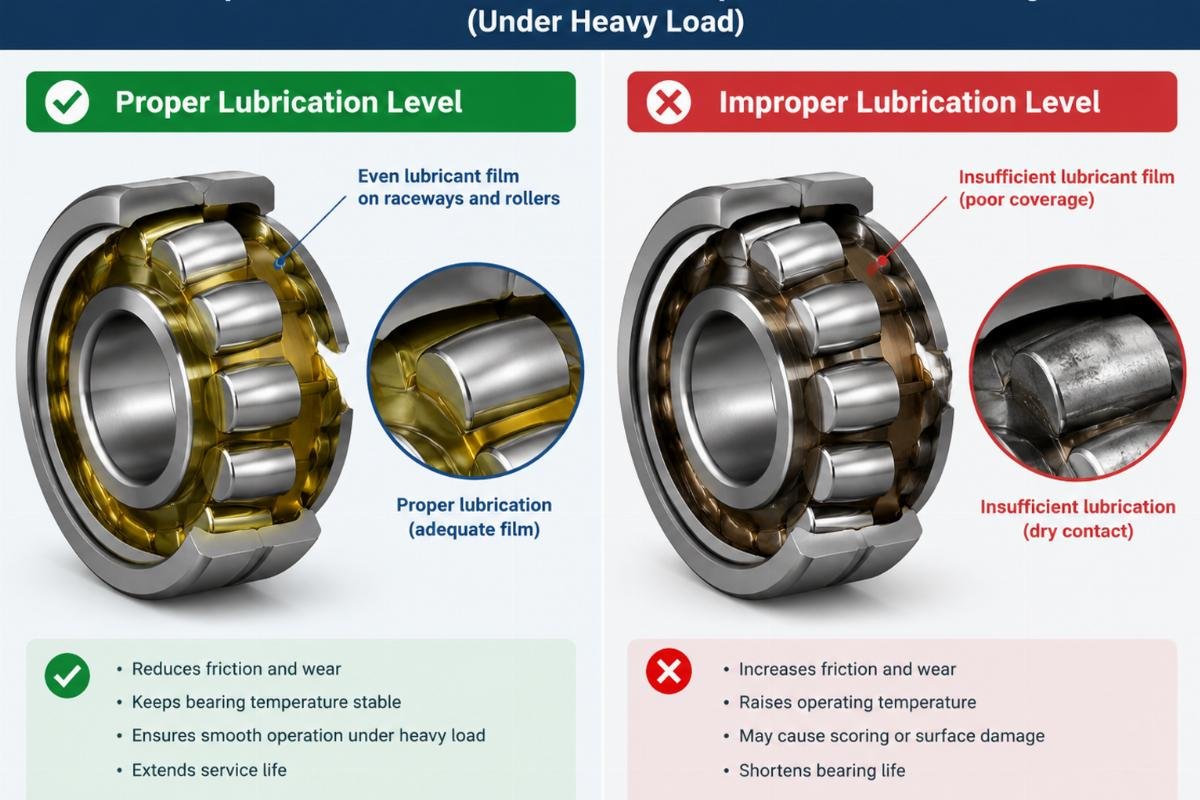
Understanding these root causes allows maintenance teams to move beyond blame and focus on prevention.
How to Build a Reliable Planned Maintenance Schedule?
Establish vibration monitoring and strict lubrication intervals based on actual operating conditions.
A reliable planned maintenance schedule is not just a calendar reminder; it is a dynamic system based on real-time data and engineering principles. The goal is to detect anomalies before they result in catastrophic failure. This requires integrating condition monitoring techniques with standardized maintenance procedures.
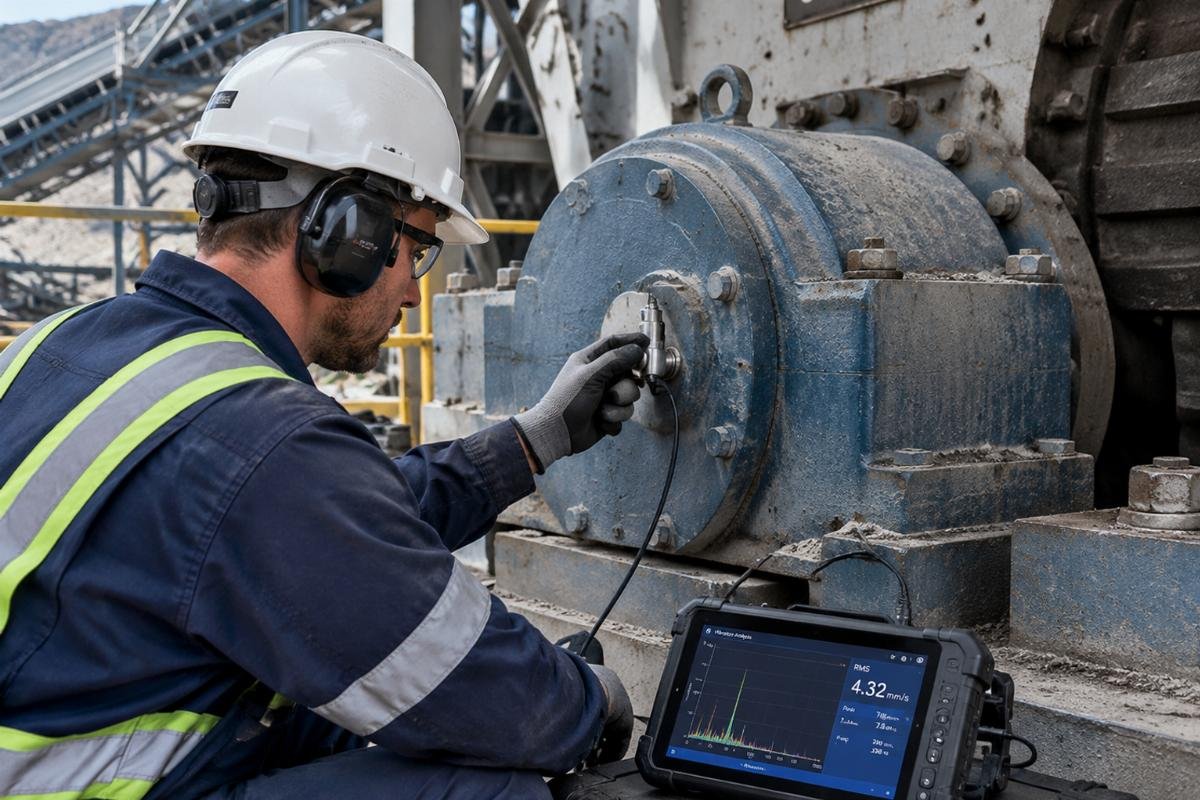
Vibration analysis is one of the most effective tools for predicting bearing health. By measuring vibration levels and frequencies, technicians can identify issues such as imbalance, misalignment, or early-stage bearing defects like spalling or cracking. Setting thresholds based on ISO standards allows teams to schedule interventions during planned shutdowns rather than reacting to sudden breakdowns. For example, a slight increase in high-frequency vibration might indicate early lubrication distress, prompting a relubrication task before damage occurs.
Lubrication intervals should be calculated based on operating temperature and speed, not just time. Higher temperatures accelerate oil degradation and grease oxidation. Using the manufacturer’s technical manuals as a baseline, maintenance teams can adjust intervals according to actual site conditions. In hot climates or high-load applications, more frequent relubrication with high-temperature stable grease is necessary. Additionally, using automated lubrication systems can ensure consistent grease delivery, reducing the risk of human error.
| Maintenance Activity | Frequency Determination | Monitoring Method | Expected Outcome |
|---|---|---|---|
| Visual Inspection | Weekly or per shift | Visual check for leaks, noise, temperature | Early detection of seal failure or contamination |
| Vibration Analysis | Monthly or quarterly | Portable vibration analyzer or online sensors | Identification of imbalance, misalignment, or bearing defects |
| Relubrication | Based on operating hours/temperature | Grease analysis or calculated intervals | Prevention of wear and overheating |
| Thermography | Quarterly | Infrared camera | Detection of hot spots indicating friction or electrical issues |
Implementing these steps creates a data-driven maintenance culture that prioritizes reliability over convenience.

Consistency in execution is key to making this schedule effective.
What Are the Hidden Costs of Emergency Procurement?
Air-freight and production downtime far exceed the price difference of planned bulk orders.
When a critical bearing fails unexpectedly, the focus shifts immediately to speed. This urgency triggers a chain of expensive decisions. The most visible cost is the premium paid for expedited shipping. Air-freighting a single bearing can cost several times more than sea freight for a full container. However, this is only the tip of the iceberg.
The true cost lies in production downtime. In continuous process industries like steelmaking or cement production, every hour of stopped output represents significant lost revenue. A mid-six-figure loss can accumulate rapidly if a key machine remains idle while waiting for a spare part. Furthermore, emergency orders often lack the benefit of bulk pricing. Buying a single unit at retail or expedited rates is substantially more expensive than procuring the same item as part of a planned bulk order.
Logistics complexity also increases during emergencies. Customs clearance for urgent shipments can face delays, and the lack of proper documentation can lead to further hold-ups. In contrast, planned procurement allows for consolidated shipping, better customs preparation, and the ability to negotiate favorable terms. By shifting to planned maintenance for bearings, companies can avoid these hidden costs and optimize their logistics spend.
Consider the case of a cement plant in Southeast Asia. They frequently faced emergency orders for crusher bearings due to unpredictable failures. After implementing a condition-based maintenance program, they reduced the frequency of emergency replacements noticeably. This allowed them to switch from air-freight to sea freight for their spare parts, reducing logistics costs proportionally and improving cash flow.
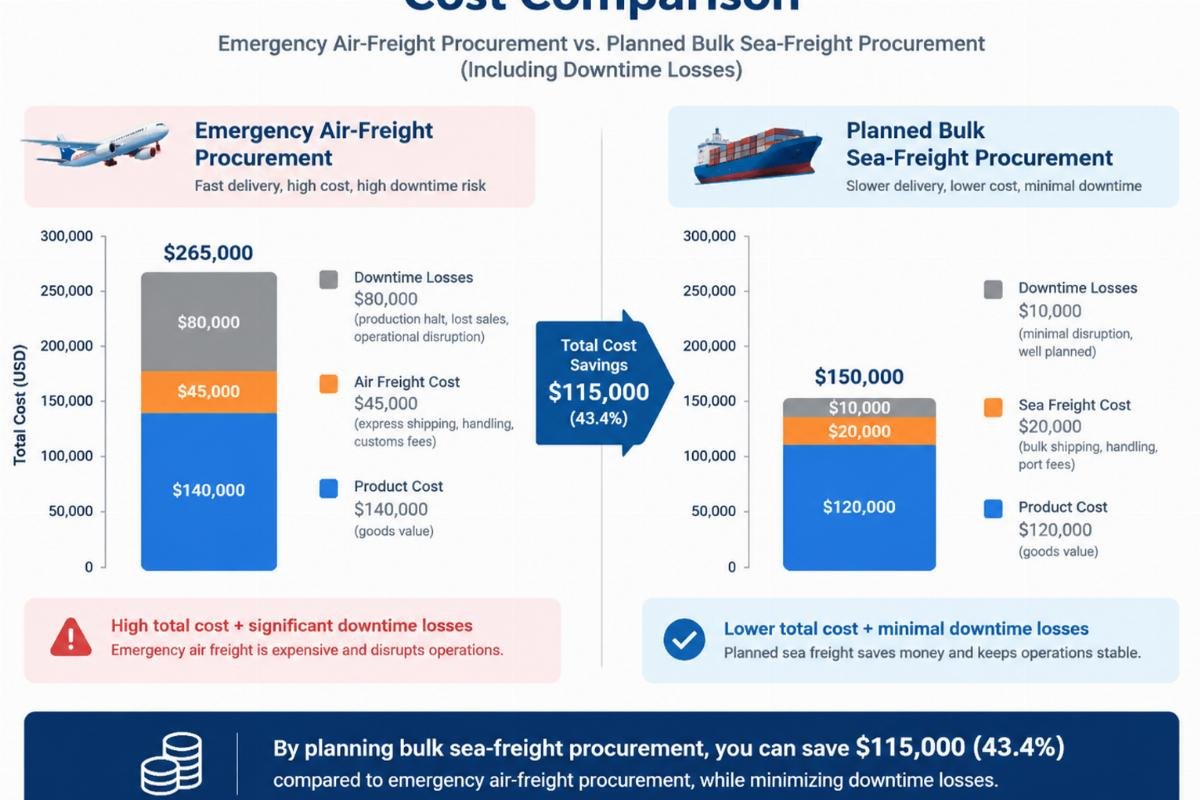
Recognizing these hidden costs provides a strong financial argument for investing in maintenance planning.
How to Optimize Your Bearing Inventory with Predictive Data?
Shift from reactive stocking to condition-based replenishment using failure analysis.
Traditional inventory management often involves keeping a large stock of “just-in-case” spares. This ties up capital and risks obsolescence. A more efficient approach uses predictive data to guide inventory levels. By analyzing failure modes and maintenance records, companies can determine which bearings are critical and which have predictable lifespans.
Condition-based replenishment means ordering replacements based on the actual health of the installed bearings rather than a fixed reorder point. If vibration analysis shows a bearing is degrading, a replacement can be ordered in advance, ensuring it arrives before failure occurs. This reduces the need for large safety stocks of emergency spares. Additionally, failure analysis of removed bearings can provide insights into whether the current selection is appropriate. If a specific bearing type fails repeatedly due to contamination, switching to a sealed or shielded variant might reduce the need for frequent replacements.
Working with a supplier who offers technical selection support and failure analysis services can enhance this process. Instead of just providing parts, such partners can help interpret maintenance data and recommend improvements. For instance, if a series of bearings fails due to misalignment, the supplier might suggest self-aligning bearings or provide installation tools to ensure proper fit. This collaborative approach transforms the supplier relationship from transactional to strategic.
Moreover, having access to a mixed-brand spot inventory allows for flexibility. If a specific brand is unavailable, equivalent models from other reputable manufacturers can be sourced quickly, preventing delays. This flexibility is crucial for maintaining operations without overstocking any single brand.

Optimizing inventory through data leads to a leaner, more responsive supply chain.
Conclusion
Planned maintenance transforms bearing management from a cost center to a reliability asset.
By focusing on proper lubrication, condition monitoring, and correct selection, industries can drastically reduce emergency bearing orders and associated downtime. This shift not only lowers operational costs but also enhances overall equipment effectiveness. Embracing a data-driven approach to maintenance and procurement ensures long-term stability and efficiency in heavy industrial operations.
Tags
Share this article

Written by
author
Editor covering global sourcing, supplier verification, and industrial product knowledge. Content is compiled from manufacturer specifications, industry standards, and hands-on experience with international B2B buyers. Every article is fact-checked before publishing to help procurement professionals make informed decisions.
More articles by author

