Agricultural Bearing Failures: Wholesale Supplier Solutions
Most agricultural bearing failures stem from improper selection and installation mismatches rather than product defects. Learn systematic failure analysis, correct clearance fits for thermal expansion, and targeted maintenance protocols to prevent premature breakdowns in harsh field conditions.
-
By author
- Updated
- 8 min read

Agricultural Bearing Failures: Wholesale Supplier Solutions
Most agricultural bearing failures are not product defects.
The majority of premature breakdowns in farm machinery stem from improper selection and installation mismatches rather than manufacturing flaws. Systematic failure analysis, correct clearance fits for thermal expansion, and targeted maintenance protocols are the primary drivers of reliability in harsh field conditions.
Walking through a sugarcane field in Vietnam after a heavy rain, the mud is not just dirt; it is an abrasive slurry that seeks every microscopic gap in a machine’s defense. I have stood beside harvesters where the header bearings failed within weeks, not because the steel was weak, but because the seals were missing or mismatched for the muddy environment. The operator expected a full season of service; he got a halted production line and a costly claim. This pattern repeats across regions. When we peel back the casing of a seized bearing, the story is rarely about poor quality. It is about the disconnect between standard industrial specifications and the brutal reality of agricultural work. [NEED_CITE: common causes of agricultural bearing failure per ISO 15243]
Understanding these dynamics requires moving beyond simple part replacement. It demands a technical approach to sourcing and application. As a global supplier dealing with diverse climates and machinery types, we see that the right agricultural bearing failures prevention strategy starts long before the first hour of operation.
Why Do Agricultural Bearings Fail Prematurely?
Contamination and misalignment account for the vast majority of field failures, yet they are often misdiagnosed as material fatigue. In agricultural settings, the environment is the primary adversary. Dust, crop residue, and moisture penetrate seals that might be adequate for a clean factory floor but are insufficient for a harvester operating in wet soil.
Consider the case of a large farm that opted for standard outer spherical bearings without enhanced sealing packages. The initial cost was lower, but the lack of proper protection meant that fine particulate matter entered the rolling elements. Within a short period, the lubricant turned into an abrasive paste. The result was rapid wear and eventual seizure. This is not an isolated incident. Many operators assume that more grease will solve the problem. However, over-greasing can lead to churning, which generates excessive heat and can blow out seals, creating an entry point for contaminants. [NEED_CITE: effects of over-lubrication on bearing temperature and seal integrity]
Another critical factor is thermal expansion. Farming equipment often operates under high loads with significant temperature fluctuations. If the bearing clearance is not selected to accommodate this expansion, the internal fit becomes too tight. This leads to overheating and accelerated wear. Most people think bearings fail due to poor quality; the true cause is often mismatched clearance for thermal expansion in high-load farming scenarios.

When analyzing these failures, we look at the residual debris. The presence of organic matter or specific mineral particles tells us exactly where the seal failed. This insight guides the selection of replacements. For distributors and MRO operators, understanding this root cause is essential. It shifts the conversation from price per unit to total cost of ownership. A slightly more expensive bearing with superior sealing and appropriate clearance can prevent downtime that costs far more than the part itself. Our technical support team often assists clients in identifying these mismatch issues, ensuring that the replacement part is not just a duplicate, but an improvement suited for the specific operating conditions.
How to Conduct a Systematic Failure Analysis?
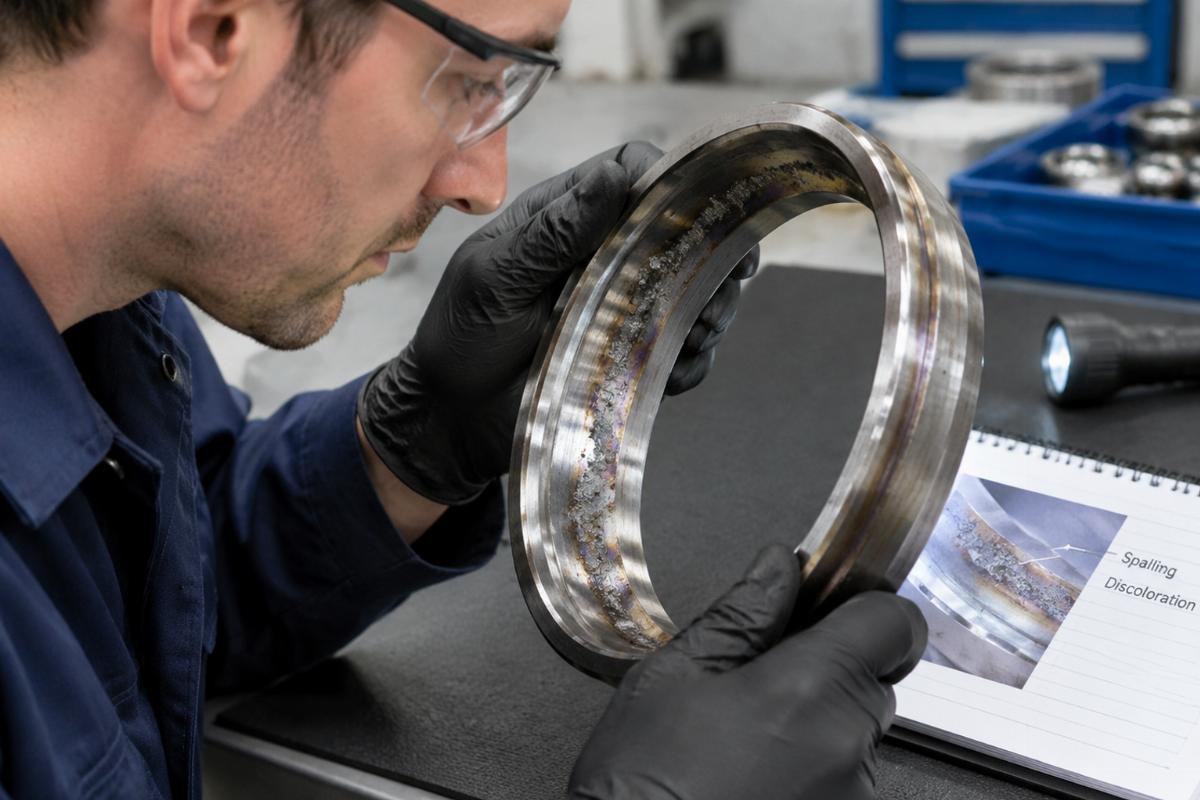
Inspecting residual debris and raceway patterns reveals the exact root cause of failure. A systematic approach prevents the recurrence of the same issue. Instead of simply swapping out the broken component, technicians should document the state of the failed bearing. This includes checking for discoloration, which indicates overheating, and examining the raceways for spalling or pitting.
Vibration analysis frequencies and oil debris particle counting are professional methodologies used to detect early signs of distress. [NEED_CITE: vibration analysis standards for rotating machinery] While these tools are common in large industrial plants, even visual inspection can provide valuable data. For instance, if a thresher drum bearing shows fatigue spalling, it may indicate shock loads due to incorrect mounting tools or operational abuse, rather than normal wear lifecycle.
| Failure Mode | Visual Indicator | Likely Root Cause | Recommended Action |
|---|---|---|---|
| Contamination | Abrasive wear, darkened lubricant | Seal failure, dirty environment | Upgrade sealing, improve maintenance hygiene |
| Overheating | Discoloration (blue/brown), hardened steel | Insufficient clearance, over-greasing | Check fit tolerances, adjust lubrication volume |
| Misalignment | Uneven wear patterns on raceways | Bent shaft, improper housing bore | Align shaft, check housing dimensions |
| Fatigue Spalling | Flaking or pitting on raceways | Shock loads, incorrect mounting | Review mounting procedures, check load ratings |
A European agricultural equipment dealer once shared a case where conveyor rollers were seizing repeatedly. Initial assumptions pointed to defective bearings. However, a closer look revealed that the clearance fits were improper for the operating temperature. The inner ring expanded more than the outer ring, eliminating the necessary internal clearance. This caused the rollers to overheat and seize. By switching to bearings with a C3 clearance, the issue was resolved. [NEED_CITE: ISO standards for bearing internal clearance]
This type of analysis is crucial for OEMs and MRO operators. It transforms maintenance from a reactive cost center into a proactive reliability strategy. We support our partners by providing genuine multi-brand replacements that meet these specific technical requirements. Whether it is an SKF, FAG, or TIMKEN bearing, ensuring the authenticity and correct specification is vital. Our inventory allows for quick cross-referencing and substitution with equivalent models from other premium brands like NSK or NTN, ensuring that downtime is minimized while maintaining technical integrity.
What Are the Correct Installation Steps for Harsh Environments?
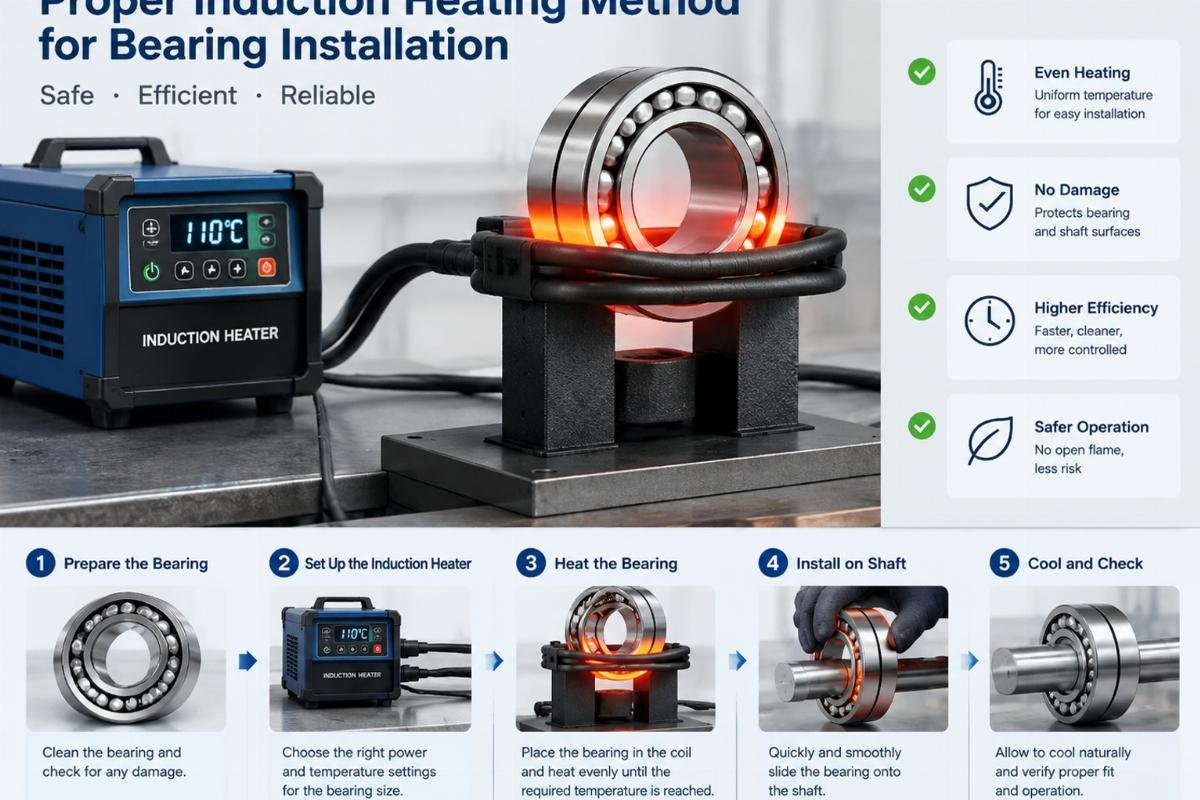
Proper heating methods and precise clearance fits prevent immediate damage during installation. Many failures occur before the machine even starts running, due to incorrect mounting practices. Using a hammer to drive a bearing onto a shaft is a common mistake that causes brinelling and internal damage. Instead, induction heaters or oil baths should be used to expand the inner ring uniformly.
The process begins with verifying the shaft and housing dimensions against ISO standards. [NEED_CITE: ISO tolerance classes for shaft and housing fits] Any deviation can compromise the bearing’s performance. Once the dimensions are confirmed, the bearing should be heated to the recommended temperature, typically around 80-100 degrees Celsius, avoiding direct flame contact. This ensures uniform expansion without altering the metallurgical properties of the steel.
During installation, alignment tools must be used to ensure the bearing seats squarely. Misalignment, even by a small fraction, can lead to uneven load distribution and premature failure. After seating, the bearing should be allowed to cool naturally before applying any load. This prevents the inner ring from shrinking unevenly and losing its fit on the shaft.
A case from a Southeast Asian sugar mill illustrates the importance of this step. Technicians were using impact tools to mount thresher drum bearings. The shock loads caused micro-cracks in the raceways, leading to early fatigue failure. After implementing proper heating and pressing techniques, the lifespan of the bearings increased substantially. [NEED_CITE: best practices for bearing mounting in heavy machinery]
For wholesalers and distributors, educating end-users on these installation steps is a value-added service. Providing technical datasheets and guidance on proper tools can reduce warranty claims and build trust. Our team offers application guidance to help clients select the right mounting accessories and procedures for their specific equipment. This holistic approach ensures that the genuine bearings we supply perform as intended, maximizing their service life in harsh agricultural environments.
How to Optimize Daily Maintenance to Extend Lifespan?
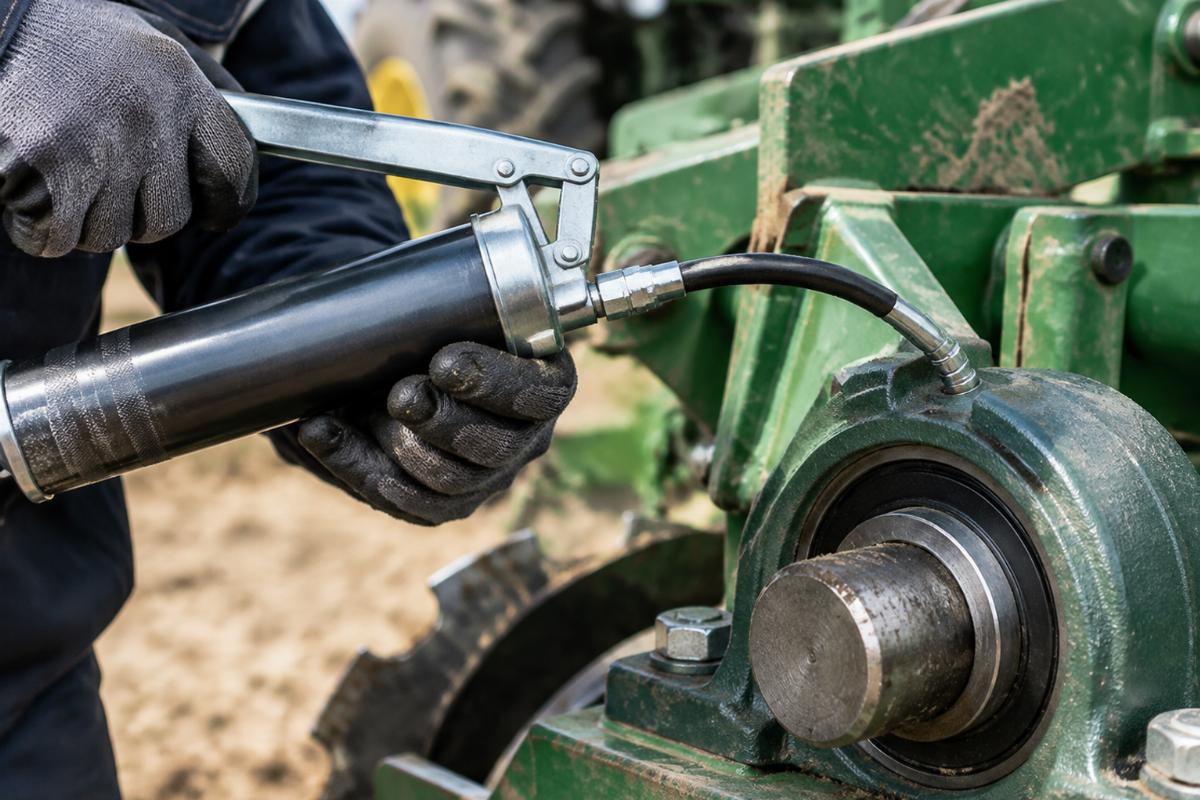
Targeted lubrication schedules and effective sealing are critical for muddy conditions. Maintenance is not just about adding grease; it is about managing the lubricant’s condition and quantity. Over-greasing is as harmful as under-greasing. Excess grease churns, generating heat that degrades the lubricant and damages seals. Under-greasing leads to metal-to-metal contact and rapid wear.
A structured maintenance plan should include regular inspections of seal integrity. In muddy environments, seals should be checked for cracks or displacement. If a seal is compromised, it must be replaced immediately to prevent contamination. Lubrication intervals should be adjusted based on operating hours and environmental conditions. For example, during harvest season in wet conditions, more frequent checks may be necessary.
Using the right type of lubricant is also essential. High-viscosity greases with extreme pressure additives are often required for heavy-load agricultural applications. [NEED_CITE: lubrication guidelines for agricultural machinery] The grease should be compatible with the bearing materials and seals to prevent chemical degradation.
A farmer in Latin America reduced his bearing replacement frequency by adopting a targeted maintenance schedule. Instead of greasing on a fixed calendar basis, he monitored the condition of the grease and the temperature of the bearings. This allowed him to identify issues early and adjust his maintenance routine accordingly. The result was a noticeable drop in unplanned downtime and maintenance costs.
For MRO operators, having access to a wide range of genuine lubricants and seals is as important as having the bearings themselves. Our one-stop sourcing solution includes not only bearings from brands like KOYO, NACHI, and IKO but also complementary maintenance products. This ensures that our clients can maintain their equipment with consistent quality and reliability. By combining proper maintenance practices with high-quality components, agricultural operators can achieve maximum uptime and productivity.
Conclusion
Systematic analysis and correct maintenance prevent most agricultural bearing failures.
Premature breakdowns are largely avoidable through proper selection, installation, and care. Understanding the root causes, such as contamination and mismatched clearance, allows for targeted solutions that extend equipment life. Partnering with a knowledgeable supplier ensures access to genuine parts and technical expertise needed to keep operations running smoothly.
Share this article

Written by
author
Editor covering global sourcing, supplier verification, and industrial product knowledge. Content is compiled from manufacturer specifications, industry standards, and hands-on experience with international B2B buyers. Every article is fact-checked before publishing to help procurement professionals make informed decisions.
More articles by author

